

How to Plan the Perfect Surfing Trip in Costa Rica
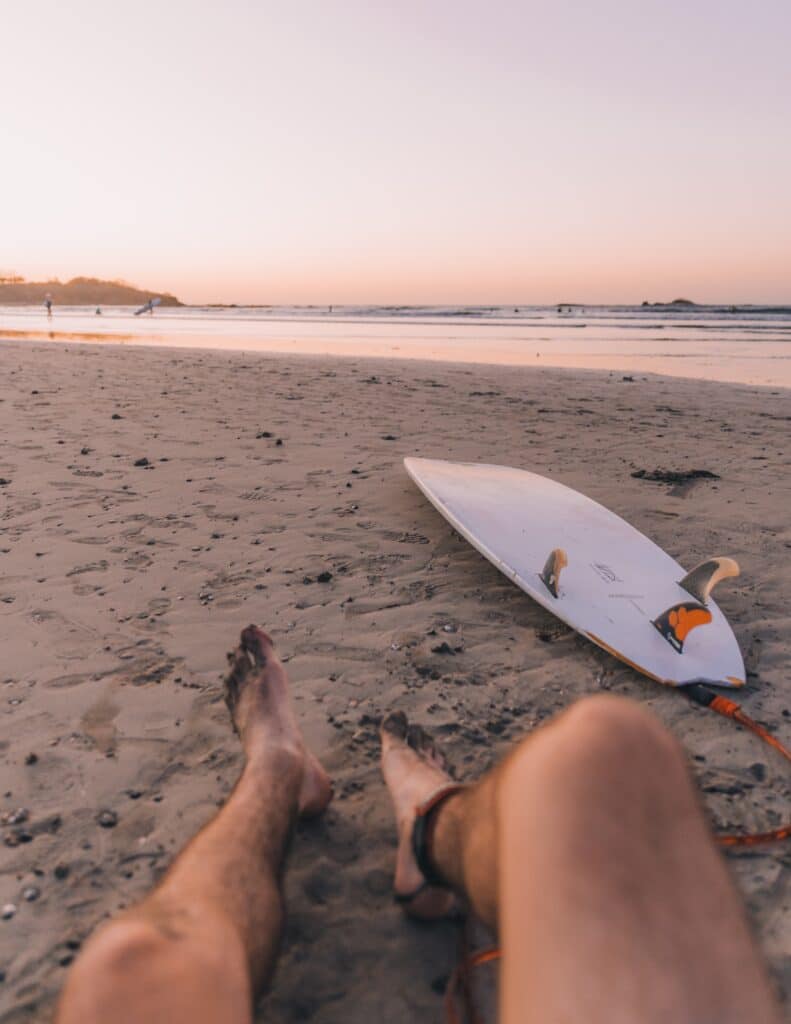 Costa Rica may well be one of the world’s best destinations for multi-sport, adventure-filled vacations yet there is one specific activity that attracts dedicated pros and amateurs from every corner of the world, and that’s a surfing trip in Costa Rica!
Planning a surfing trip in Costa Rica is made easy by the country’s profusion of dedicated seaside hotels. Popular surfing beaches boast a plethora of surf schools and you’ll also find an array of world-class surf camps – the perfect solution for those who want to learn and/or practice the sport daily during their stay.
Of course, on an adventure vacation in Costa Rica, you’re also able to spend just a day or two surfing its sensational beaches.
Whether you wish to enjoy a truly immersive surfing holiday in Costa Rica or just want to know the best places where you can rent a board for the day, we’ve got you covered!
Costa Rica Surf Trip at a Glance
Costa Rica catches swell year round. Both coasts produce waves. The Pacific side fires from May through November with south and southwest swells. The Caribbean coast lights up between October and March when tropical storms push waves toward shore. Water temp stays at 79 to 84°F all year. No wetsuit needed. Ever.
Two international airports serve the country. Juan Santamaria (SJO) near San Jose connects to the Central and Southern Pacific surf zones plus the Caribbean. Daniel Oduber (LIR) in Liberia drops visitors right into the Northern Pacific and Guanacaste surf region. Most surf towns sit within a two to five hour drive from one of these airports.
The country breaks down into four surf regions: Northern Pacific (Guanacaste), Central Pacific (Jaco and surrounding areas), Southern Pacific (Dominical down to Pavones), and the Caribbean (Puerto Viejo and Cahuita). Each region has a different vibe. Each one serves a different kind of surfer. The breakdown below covers all four.
Why Plan A Surfing Trip In Costa Rica?
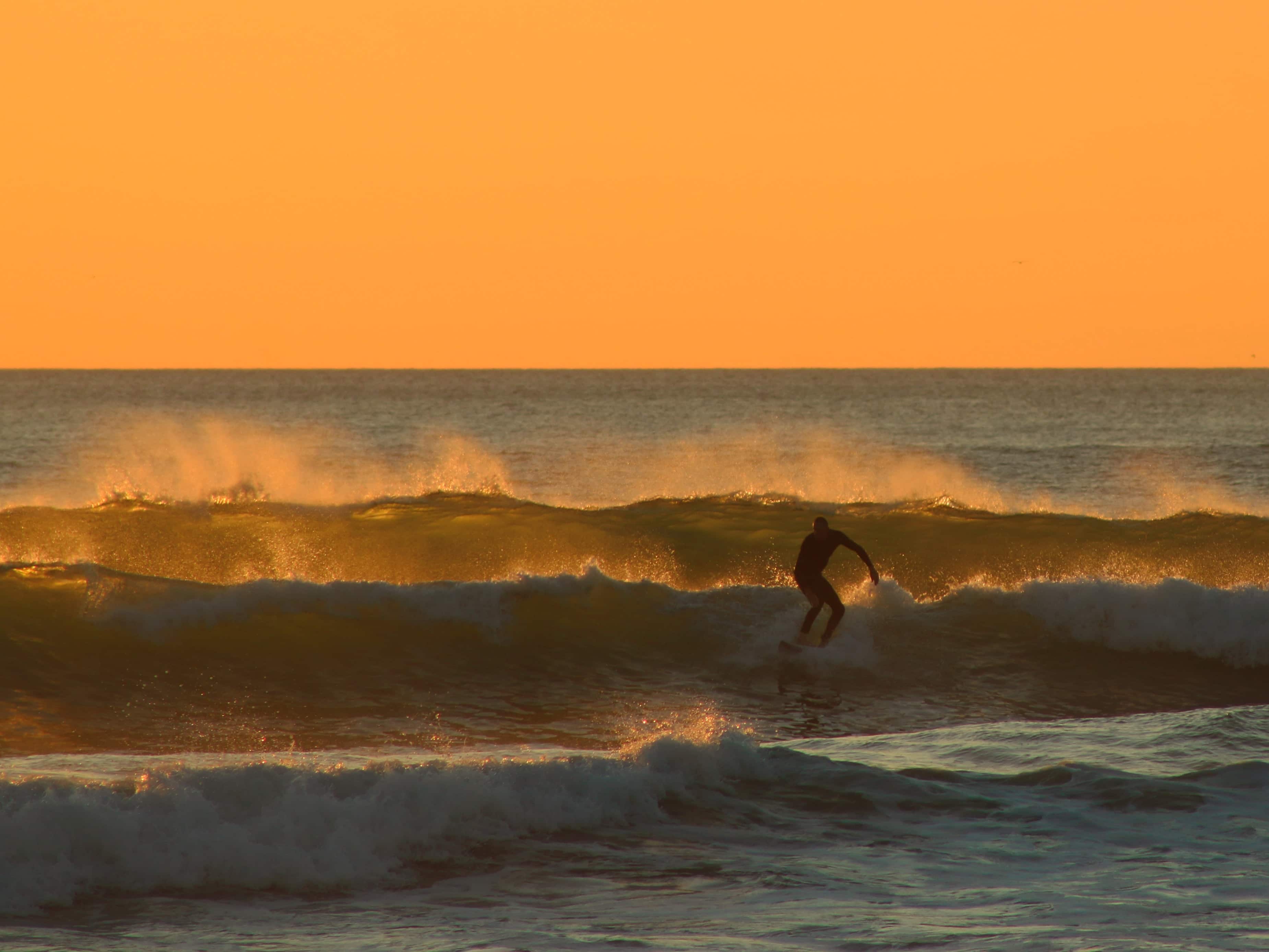 Everything about Costa Rica goes hand-in-hand with the surfing ‘scene’ – the idyllic tropical beaches, the stunning climate, the amazing local food, and very laid-back culture and living costs that mean you can enjoy it all for a vacation budget that won’t break the bank.
Need more reasons to plan a surfing trip in Costa Rica? OK.
How about world-class waves?
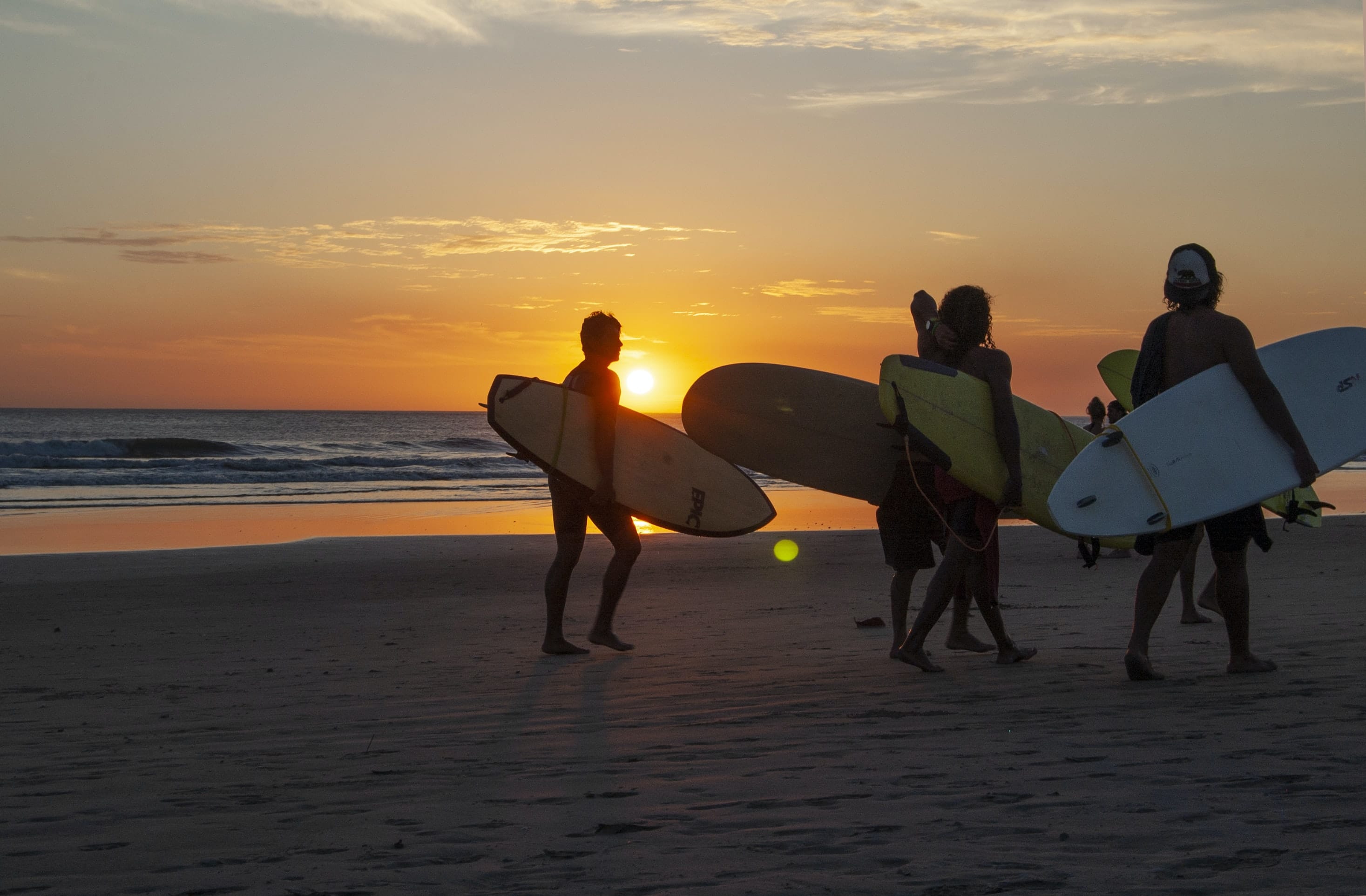 Costa Rica is one of the few countries around the world considered genuine destinations for specialized surfing trips. Playa Grande, a relaxed seaside Guanacaste town, has topped so many lists of ‘best surfing beaches in the world’ that it’s become a source of pride for locals. From DriftMagazine to Holidify and even this US surf school in San Diego: everyone agrees that if you’re looking for the best surfing in the world, you could do no better than to vacation in Costa Rica.
Mostly, it’s because the country’s exceptional Pacific coast offers something for every kind of surfer. You’ll find world-class point breaks and hollow tunnels as well as ‘tamer’ waves that are ideal learning blocks. The waves are consistent and the breaks about the best Central America has to offer.
All of this, in a paradise setting that takes your breath away.
The Four Surf Regions of Costa Rica
Every Costa Rica surf trip starts with one choice: which region? The coastline stretches over 800 miles. Surf spots scatter across four zones, each with its own wave types, crowd levels, and off-the-water vibe. Picking the right zone for the trip matters more than picking the right beach.
A seven to ten day trip works best in a single region. Two regions is a stretch at that length. Longer trips of two weeks or more can cover more ground. Here’s what each zone offers.
Northern Pacific (Guanacaste Coast)
This is the most popular surf region in the country. It’s also the most accessible. Fly into LIR (Liberia) and reach Tamarindo in about an hour. Nosara sits roughly two and a half hours south. Santa Teresa, at the tip of the Nicoya Peninsula, takes about four to five hours from LIR or SJO.
The surf here is the most consistent in Costa Rica. Swells come from the north, west, and south. That means waves year round with very few flat days. The region also tends to be drier than the rest of the country during the green season, so expect more sun even between May and November.
Tamarindo is the hub. Surf schools on every block. Board rentals at every corner. Nightlife after dark. The waves suit beginners and intermediates on the main beach. Playa Grande, Playa Langosta, Playa Avellanas, and Playa Negra are all within a short drive and serve up stronger waves for progressing surfers.
Nosara (Playa Guiones) is the wellness and surf combo spot. Four miles of beach break with consistent, user friendly waves. Yoga studios and healthy cafes line the roads. Crowds can get heavy during peak season, but the sheer length of the beach spreads people out.
Nicoya Peninsula (Santa Teresa, Mal Pais, Playa Carmen) sits at the southern tip of this region. Santa Teresa has grown fast in the last decade. Trendy restaurants, boutique hotels, and a surf and yoga crowd give it an international feel. The waves serve all levels. Mal Pais adds miles of uncrowded beach break with rocky reef points that hold big swells. This area still feels remote even with the growth.
Witch’s Rock (Playa Naranjo) and Ollie’s Point sit inside Santa Rosa National Park, way up north. Both require a boat trip from Playas del Coco or Tamarindo. Witch’s Rock is a powerful beach break. Ollie’s Point is a right point break that can run for 300 yards on a good day. Both are bucket list waves.
Skill range: Beginner to advanced, depending on the specific break. Best for: First timers to Costa Rica. Surf and yoga travelers. Families. Social travelers who want nightlife and restaurants nearby.
Central Pacific (Jaco Region)
The Central Pacific region is the closest surf zone to San Jose. Jaco sits about an hour and a half from SJO airport. That short drive makes this region a popular pick for quick trips or last minute surf sessions.
Jaco is the busiest surf town in the country. The main beach break serves up average peaks at high tide. Good for beginners. The town itself is lively with bars, casinos, and restaurants. Not the most charming spot, but convenient.
Playa Hermosa sits just ten minutes south of Jaco. Black sand, powerful beach break, double overhead days, and serious rip currents. This is an advanced surfer’s beach. Hermosa hosts the International Quicksilver Championship every year. Not a spot for beginners.
Boca Barranca, north of Jaco, is a left hand river mouth point break. On a bigger swell, rides can run longer than eight football fields. Watch out for river pollution and crocodiles at the river mouth. That warning applies to every river mouth break in Costa Rica.
Playa Esterillos is a cluster of breaks south of Jaco. Rippable reef breaks, hollow sand bottom A frames, and even outer reef waves for tow in surfing on big days. Something for every level depending on tide and swell.
Skill range: Beginner (Jaco main beach) to advanced (Hermosa, Boca Barranca). Best for: Short trips. Surfers who want quick access from SJO. Advanced surfers chasing power.
Southern Pacific (Dominical to Pavones)
The Southern Pacific is the wildest, most remote surf zone. It’s also where some of the best waves in the entire country break. The trade off? Getting here takes time. Roads get rough. A 4×4 is strongly recommended, sometimes required. Pavones is a solid ten hour drive from San Jose. The last two hours need someone who knows the roads.
Dominical is the most accessible town in this region. A charming, laid back beach town with cafes, bars, and all the western amenities a surfer needs. The beach break here runs the full two mile stretch with mid sized swells and something for every level. Probably the most consistent waves in the southern zone.
Uvita, just south of Dominical, is quieter and known more for the Whale Tail sandbar and Marino Ballena National Park. Surf here is less consistent but worth checking on bigger swells.
Pavones is the crown jewel. The world’s second longest left hand point break. On a good south swell, a single wave can run for nearly a mile. Three minutes on one ride. Legs burning by the halfway mark. But don’t show up expecting to score. Pavones only works during the south swell season, roughly May through October. Even during prime months, weeks can pass without waves. It sits on the Golfo Dulce in Puntarenas Province. Remote, rugged, and raw.
Matapalo sits on the north side of the Golfo Dulce. A right hander with potential but less consistency than Pavones. Mostly remote jungle with limited amenities.
Skill range: Intermediate (Dominical) to expert (Pavones, Matapalo). Best for: Experienced surfers chasing world class waves. Travelers who want off the beaten path raw Costa Rica. Not ideal for beginners or short trips.
Caribbean Coast (Puerto Viejo and Cahuita)
The east side of Costa Rica is a different world. The vibe shifts from Pura Vida surf culture to reggae beats and Caribbean flavor. The surf is not consistent year round like the Pacific. But when it turns on, it turns on hard.
Peak swell season on the Caribbean runs from October through March. Tropical storms and cold fronts push swells toward shore during these months. Outside that window, expect flat spells.
Salsa Brava in Puerto Viejo is the headline wave. A heavy, barreling reef break that will humble even experienced surfers. When a good swell hits, this is the heaviest wave in Costa Rica. Not for the faint of heart. Not for beginners. Period.
Cahuita has a few reef and beach breaks. More approachable than Salsa Brava but still best suited for intermediate surfers and above.
Crowds get heavy when the swell is on. Locals and expats have the lineup wired and the vibe can be territorial. Respect, awareness, and a good attitude go a long way here.
Important safety note: sharks are not uncommon on the Caribbean side. Crocodiles can appear at river mouth breaks. Exercise caution and ask locals about conditions before paddling out.
Skill range: Intermediate to expert. Best for: Surfers who want a Caribbean experience. Travelers who have already done the Pacific and want something different. Cultural exploration alongside surfing.
When Is The Ideal Time To Plan A Surfing Trip In Costa Rica?
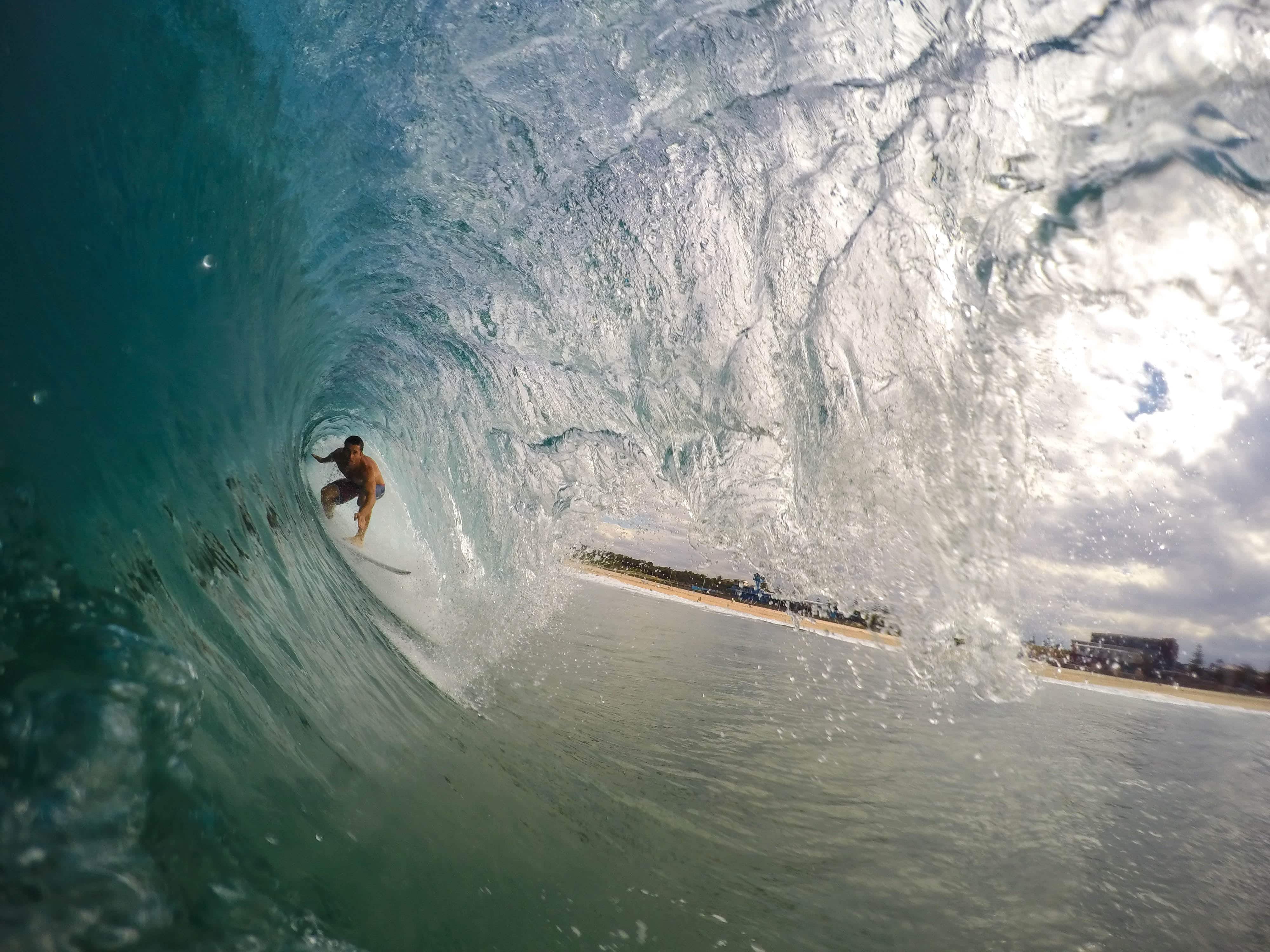 Experienced surfers who’ve been here and surfed that, will tell you that every day in this paradise is a brilliant day for catching waves. Yet there’s no denying that some months are a little more ‘perfect’ than others, especially if you are a beginner, and especially if you wish to head to the southern half of the western Pacific coast, where seasonal climate changes can hinder good surfing.
The rainy season, which kicks off in May (and runs until about November) attracts the pro surfers – swells are huge and conditions challenging, something experienced surfers absolutely cherish.
During the dry season, you can expect those iconic blue skies, every single day and although the surf is not quite as impressive, it is just perfect for amateurs. Or pros who want to have a super enjoyable vacation and not mess with death-defying swells every day!
Month by Month Surf Calendar for Costa Rica
The section above covers the basics. But surfers planning a trip need more detail than just “dry” and “wet.” Here’s what each stretch of the year actually looks like on the water.
December Through April (Dry Season)
Blue skies, offshore morning winds, and glassy conditions. The Pacific side averages 3 to 4 foot waves during this window. Clean, playful, and perfect for beginners and intermediates. Crowds peak from late December through February as tourists flood in. Prices for hotels and rentals also peak during this stretch.
The Northern Pacific (Tamarindo, Nosara, Santa Teresa) stays the most consistent through the dry months. Southern zones can go flat for days at a time.
On the Caribbean side, this is actually peak swell season. December through March brings the best waves to Puerto Viejo and Cahuita as cold fronts and tropical systems push swells from the north and east.
May Through August (Early Green Season)
The Pacific starts receiving south and southwest swells. Wave size jumps to 4 to 8 feet on bigger days. June, July, and August are some of the best months for intermediate and advanced surfers on the Pacific coast. Morning sessions often stay clean before afternoon rain showers roll in.
Rain falls mostly in the afternoon and evening. Mornings are often sunny. The landscape turns lush green. Crowds thin out and hotel prices drop by 20 to 40 percent depending on the region. This is the sweet spot for surfers who want good waves and fewer people.
September Through November (Late Green Season)
The biggest swells of the year hit the Pacific coast. Wave heights can push 6 to 10 feet and beyond during strong south swells. September and October often see the most rain. Some roads in remote areas (like Pavones and parts of the Osa Peninsula) can become difficult or impassable.
This is prime time for advanced surfers. Pavones fires during these months. Hermosa gets heavy. Even Tamarindo sees overhead sets. Beginners should stick to sheltered spots or take lessons with local surf schools who know where conditions stay manageable for new surfers.
The Caribbean side goes quiet during these months as the Pacific dominates. October is the transition month where both coasts can produce waves.
What Should I Pack For A Surfing Trip In Costa Rica?
Dedicated surfers will pack their own boards, as well as swim shorts /swimsuits, 50+ waterproof sunscreen (our sun can be brutal!) a basic first-aid kit, booties, a leg rope (or two), a repair kit, straps, and wax pot, as well as the surfing essentials like flip-flops, sarongs, cap, insect spray and a couple of towels.
Everything else is luxury! For more tips on what to pack for and adventure vacation in Costa Rica, see here.
Now, you’re probably wondering if it’s even worth bringing all your surfing gear with you to Costa Rica. The answer? It depends. If you just want to include a few surfing days here and there on a multi-sport vacation then it’s probably not worth it. Everything you need can be rented locally and it will certainly make traveling through the country and enjoying all manner of sports a lot easier.
Renting surfing gear in Costa Rica can also be cheaper given the sometimes-steep hike to bring one on an international flight. Gear can be rented by the day or by the week.
Some will argue that avid surfers will definitely want to bring their own board but here’s the thing: surfboards can suffer damage in transit and whilst it’s bad enough to ding your board at the beach, it is infuriating (and potentially costly) to crack it on a plane. Plus, if you do bring your own board, make sure it’s a solid all-rounder.
Getting to Costa Rica: Airports, Flights, and Getting Around
This part trips people up more than the surf itself. Costa Rica has two international airports, and which one to fly into changes the entire trip.
Which Airport to Choose
Juan Santamaria International Airport (SJO) is near San Jose, the capital. Most international flights land here. SJO is the better choice for trips to the Central Pacific (Jaco, Hermosa), the Southern Pacific (Dominical, Uvita, Pavones), or the Caribbean coast (Puerto Viejo). It also works for reaching the Nicoya Peninsula (Santa Teresa, Mal Pais), though that route involves a ferry crossing or a longer inland drive.
Daniel Oduber International Airport (LIR) is in Liberia, in the Guanacaste province. This is the fast route to the Northern Pacific surf zone. Tamarindo is about one hour from LIR. Nosara is roughly two and a half hours. Several US carriers fly direct to LIR from major hubs like Houston, Dallas, Atlanta, Miami, and Los Angeles.
Quick rule: heading north? Fly LIR. Heading central, south, or Caribbean? Fly SJO.
Driving and Transport Options
A rental car gives the most freedom. For the Northern and Central Pacific, a standard vehicle works fine on paved roads. For the Southern Pacific and remote areas like Pavones, Matapalo, or parts of the Osa Peninsula, a 4×4 is required. Roads turn to dirt and mud. River crossings pop up. Do not attempt these routes in a sedan during the rainy season.
Use the Waze app for navigation. It tends to be more accurate than Google Maps in remote Costa Rica, especially for back roads and surf town turnoffs.
Shared shuttle services (like Interbus or Caribe Shuttle) connect major tourist hubs. These work well for surfers who want to skip the rental car stress. Routes run between SJO and most popular surf towns daily.
Domestic flights via Sansa Airlines connect SJO to small regional airstrips near Tamarindo, Nosara, Quepos (for Manuel Antonio and Dominical), Drake Bay, and Puerto Jimenez. Flight time is 30 to 50 minutes versus four to eight hours on the road.
Drive Time Estimates from Each Airport
From SJO (San Jose): Jaco: 1.5 hours. Dominical: 3.5 hours. Uvita: 4 hours. Puerto Viejo (Caribbean): 4.5 hours. Santa Teresa: 5 hours (includes ferry). Pavones: 8 to 10 hours.
From LIR (Liberia): Tamarindo: 1 hour. Nosara: 2.5 hours. Santa Teresa: 4.5 hours. Jaco: 4 hours.
What Are The Best Surfing Beaches In Costa Rica?
So, if surfing’s your thang, then you should probably look west – specifically, to the country’s sublime Pacific coastline. Oh, is the Caribbean no bueno for surfing, you ask? Well, in fact, it is. It’s is so good that it’s mostly reserved for seasoned surfers only. Google ‘Salsa Brava surfing’ and you’ll soon understand what we mean – hair-raising swells and barrel waves that’ll make you go all queasy.
Pin this amazing video to watch later!
There are also a few select spots on the Caribbean side for learners yet all things considered, there’s no denying the Pacific is the big surfing deal. Why? Because your options here are nearly endless, it’s easier and faster to reach this side of the country and there’s enough of everything else to turn a mere ‘surfing trip’ into an all-encompassing, totally unforgettable affair.
Here are the best and most popular players for surfing in Costa Rica (note that they are in alphabetical order so we won’t appear to be playing favorites!):
Bruja – The Witch’s Rock is a wicked spot, made all the more enticing by the fact it’s nestled in the Santa Rosa National Park (way up north), a gorgeous spot revered for Olive Ridley turtle mass nesting events. The break here is world-renowned and best tackled by experienced surfers. You’ll need a boat or private road transfer to reach it but it will be worth every pothole.
Dominical – Laid-back Dominical is quite central along the coast and boasts a charming town with bars and cafés that tend to entice multi-day stays. The surf is awesome with mid-sized swells, runs the entire length of the 2-mile beach, and offers something for everyone. Probably the most consistent waves in this entire region.
Grande – The one that needs little introduction, Playa Grande is what turned Costa Rica from a surfing hidden secret to an international superstar a few years back.
Guiones – Nosara’s main beachy hub attracts yogis and surfies in equal abundance. Given conditions can get a little pesky, and crowds a little big, it’s not a beach we’d recommend for beginners.
Hermosa – Another experienced surfer’s hub, Hermosa is – as its name suggests – an absolute stunner. Consistent breaks, out-of-this-world barrels, and a marvelous beach scene make it unmissable for pros. Hermosa hosts the International Quicksilver Championship every year.
Mal Pais – Right at the southern tip of the Nicoya Peninsula, Mal Pais looks like a speck you’d easily miss on a tour of discovery. Yet this ‘little beach’ holds plenty of local and international surfing comps every year, so that’s all you probably need to know!
Pavones – Experienced surfers head to Pavones to tackle the world’s second-longest left point break. Everyone else? They just come here to admire in awe.
Pavones is on the Golfo Dulce, in the Puntarenas Province.
Santa Teresa – One of our favorite Nicoya gems, Santa Teresa is an extraordinary spot to explore if you’re a lover of all things off the beaten path. Mind you, there’s enough here to keep you entertained and active but its relatively remote location makes it feel like it’s a world away from civilization. The surf is tops, with conditions that are suitable for every skill level and three distinct and distinctly stunning beaches.
Tamarindo – The fabulous all-rounder, Tamarindo offers breaks for world-champions and amateurs alike. Unsurprisingly, this is arguably the most popular surfing beach in the whole country. You’ll find a plethora of surf schools, shops, and camps here, as well as a great little town offering everything you need for an insanely enjoyable stay.
Surf Spot Quick Reference: Wave Type, Skill Level, and Best Conditions
The beach descriptions above capture the vibe. This section covers the technical details surfers need to pick the right spot for their level and the right time to paddle out.
Witch’s Rock (Playa Naranjo)
- Wave type: Beach break with heavy peaks
- Bottom: Sand
- Skill level: Intermediate to advanced
- Best swell: Northwest and west swells
- Best tide: Mid tide
- Best months: November through April for clean northwest swell. Also fires on south swells in summer
- Access: Boat from Playas del Coco or Tamarindo (roughly 45 minutes). Inside Santa Rosa National Park
- Hazards: Strong currents on bigger days. Remote location with no lifeguards or nearby medical help
Dominical
- Wave type: Beach break with multiple peaks along a two mile stretch
- Bottom: Sand
- Skill level: All levels. Gentler peaks at the south end suit beginners. The north end gets more powerful
- Best swell: South and southwest
- Best tide: All tides produce waves. Mid to high tide is cleaner for beginners
- Best months: May through October for bigger swells. Year round for mellow sessions
- Hazards: Strong rip currents, especially on bigger days. Stay near other surfers
Playa Grande
- Wave type: Beach break
- Bottom: Sand
- Skill level: Beginner to intermediate
- Best swell: West and northwest
- Best tide: Mid to high tide
- Best months: Year round consistency. Cleanest conditions December through April
- Hazards: Can get powerful on bigger swells. Leatherback sea turtle nesting zone from October through March. Respect nesting areas
Playa Guiones (Nosara)
- Wave type: Beach break with long, crumbly waves and some faster sections
- Bottom: Sand
- Skill level: Beginner to intermediate. Advanced surfers can find steeper sections at lower tides
- Best swell: West, southwest, and northwest
- Best tide: Mid tide tends to be best. Low tide can get shallow and punchy
- Best months: Year round. Most consistent beach break in Northern Pacific
- Hazards: Crowds during peak season (December through March). Strong sun with little beach shade
Playa Hermosa (Central Pacific)
- Wave type: Heavy beach break with fast, hollow waves
- Bottom: Black sand
- Skill level: Advanced only. Double overhead days are common
- Best swell: South and southwest
- Best tide: Mid to high tide. Low tide gets extremely shallow and powerful
- Best months: May through October. September often sees the biggest swells
- Hazards: Powerful shorebreak and strong rip currents. Not suitable for beginners under any conditions
Mal Pais
- Wave type: Beach break and rocky reef point breaks
- Bottom: Mix of sand and rock
- Skill level: Intermediate to advanced. Some mellow sections for progressing surfers
- Best swell: West and southwest
- Best tide: Mid tide for reef breaks. Beach breaks work on all tides
- Best months: Year round. Bigger waves May through October
- Hazards: Rocky bottom at some breaks. Urchins near the reef. Check with locals before paddling out at unfamiliar spots
Pavones
- Wave type: Left hand point break. One of the longest lefts in the world
- Bottom: Rock and reef
- Skill level: Advanced to expert only
- Best swell: South swell only. Needs a strong south or southwest push to break properly
- Best tide: Mid to high tide
- Best months: May through October. Can go weeks without waves even during peak months
- Hazards: Rocky bottom, long paddle back after rides, and limited medical access due to remote location. Localism exists here, so respect the lineup
Santa Teresa
- Wave type: Beach break with multiple peaks. Some reef breaks nearby
- Bottom: Sand on the main beach. Rock at some reef spots
- Skill level: All levels. Beginners at Playa Carmen. Intermediate and advanced surfers at the main beach and Mal Pais reef
- Best swell: West and southwest
- Best tide: Varies by peak. Mid tide is usually safest for most spots
- Best months: Year round. Biggest waves May through October
- Hazards: Crowds have increased significantly in recent years. Some sections get shallow at low tide
Tamarindo
- Wave type: Beach break with multiple peaks, including rights and lefts
- Bottom: Sand
- Skill level: All levels. Main beach is ideal for beginners. Nearby breaks like Langosta, Avellanas, and Negra offer more challenge
- Best swell: West and northwest
- Best tide: Mid to high tide for cleaner conditions
- Best months: Year round. Dry season (December to April) is best for beginners. Green season adds more power for intermediates
- Hazards: Heavy crowds during peak travel periods. Early mornings before 8 AM and late afternoons are less crowded. Crocodiles occasionally appear near the river mouth at the north end of the beach, so avoid that area
Where to Stay on a Costa Rica Surf Trip
The right place to sleep depends on budget, travel style, and which surf region the trip targets. Costa Rica has options across every price point.
Surf Camps
Surf camps are the most popular choice for surfers who want to improve. Most camps bundle lodging, daily surf lessons or coaching, board rentals, meals, and sometimes yoga or other activities into a weekly package. Expect to pay $800 to $2,000 per week depending on the camp and level of luxury.
Top surf camp zones: Tamarindo, Nosara, Santa Teresa, and Dominical all have multiple camps. Some, like those in Nosara, lean toward wellness and yoga. Others, like those in Tamarindo, focus purely on surf progression.
Surf camps are the best value option for solo travelers, beginners, and intermediate surfers looking for a structured trip. Most run Saturday to Saturday.
Hotels and Boutique Properties
Every major surf town has hotels ranging from $40 per night for a basic room to $300 or more for boutique beachfront properties. Tamarindo and Santa Teresa have the widest selection. Dominical and Nosara have grown significantly in recent years.
For surfers who want comfort without the surf camp schedule, a boutique hotel near the beach plus private surf lessons (typically $50 to $80 per session) is a flexible setup.
Hostels and Budget Stays
Budget travelers can find hostels and basic rooms for $15 to $40 per night in most surf towns. Tamarindo, Jaco, Puerto Viejo, and Santa Teresa all have well reviewed hostels. Expect shared dorms, communal kitchens, and a social backpacker vibe. Board rentals from $10 to $20 per day keep the total daily surf budget under $60.
Vacation Rentals and Villas
Groups and families benefit from renting a house or villa. Prices range from $100 per night for a simple two bedroom house to $1,000 or more per night for luxury villas with pools, ocean views, and private chef service.
The Nicoya Peninsula (Santa Teresa, Mal Pais) and Tamarindo area have the largest selection of vacation rentals. Southern zones like Pavones and Dominical have fewer options but the ones that exist tend to feel more secluded and intimate.
Quick Budget Guide by Region
- Northern Pacific (Tamarindo, Nosara, Santa Teresa): Highest variety. Hostels from $20 per night. Mid range hotels $80 to $150. Luxury villas $400 to $1,200 per night.
- Central Pacific (Jaco, Hermosa): Budget friendly overall. Hostels from $15. Hotels $50 to $120. Good value for money.
- Southern Pacific (Dominical, Uvita, Pavones): Fewer options. Mid range lodges $60 to $150. Luxury eco lodges $200 to $500. Book ahead in peak months.
- Caribbean (Puerto Viejo, Cahuita): Budget hotspot. Hostels $12 to $25. Bungalows and guesthouses $40 to $100. Caribbean vibe at Caribbean prices.
Beyond Surfing: What Else to Do on a Costa Rica Surf Trip
A surf trip to Costa Rica doesn’t have to be only surfing. The country packs more adventures per square mile than almost anywhere else. Mixing activities into a surf trip is easy. Most adventure hubs sit within a short drive of the top surf zones.
Whitewater Rafting
The Pacuare River is a world class whitewater run through deep jungle canyons. Class III and IV rapids. Toucans and howler monkeys in the canopy above. Multi day trips include overnight stays at riverside lodges. The Pacuare is accessible from both the Central Valley and the Caribbean side.
Zip Line and Canopy Tours
Costa Rica invented the jungle canopy tour. Flying over the treetops on a steel cable is a rush that matches anything in the surf. Monteverde and Arenal have the most famous zip line setups, but tours run near Jaco, Manuel Antonio, and Tamarindo too.
Hiking and Volcanoes
Arenal Volcano is a three to four hour drive from most Northern Pacific surf towns. The trails around its base cut through rainforest and lead to hot springs. Rincon de la Vieja National Park in Guanacaste offers bubbling mud pots, waterfalls, and volcanic craters.
Hot Springs
Soak in volcanic hot springs after a long day of paddling. Arenal has the biggest selection of hot spring resorts, from budget friendly public pools to luxury thermal spas. Tired legs recover fast in 100°F mineral water. [Link to your Hot Springs page]
National Parks and Wildlife
Costa Rica holds nearly 6% of the world’s biodiversity. Manuel Antonio National Park is a short drive from the Central Pacific surf zone and combines jungle trails with white sand beaches. Corcovado National Park on the Osa Peninsula is the wildest stretch of forest in the country. Monkeys, sloths, macaws, and (if luck is on your side) jaguars. [Link to your National Parks page]
Snorkeling and Scuba
Cahuita National Park on the Caribbean coast has coral reef snorkeling right off the beach. The Catalina Islands off the Northern Pacific coast are known for manta ray and bull shark dives. Drake Bay on the Osa Peninsula offers world class diving at Cano Island. [Link to your Snorkel/Scuba page]
Yoga
Nearly every surf town in Costa Rica doubles as a yoga hub. Nosara is the epicenter. Santa Teresa runs a close second. Surf and yoga retreats combine morning surf sessions with afternoon yoga classes. The two activities complement each other well. Flexibility, breath control, and core strength all transfer directly to surfing.
A multi activity trip through Costa Rica fills every day with something different. Surf in the morning. Raft a river in the afternoon. Soak in hot springs at night. Few countries on earth can stack that kind of variety into a single week.
Practical Tips for a Costa Rica Surf Trip
Water Temperature and What to Wear
The ocean stays between 79°F and 84°F year round. No wetsuit needed. Board shorts or a bikini. A thin rash guard helps with sun protection during long sessions. The tropical sun is aggressive, especially between 10 AM and 2 PM. Apply reef safe SPF 50+ sunscreen before every session. Reapply after.
Board Rentals and Surf Lesson Costs
Board rentals run $10 to $20 per day in most surf towns. Weekly rates drop to $50 to $80 in competitive areas like Tamarindo. Soft top longboards for beginners are the most common rental option.
Private surf lessons cost $50 to $80 per session (typically 1.5 to 2 hours). Group lessons run $30 to $50 per person. Most lessons include board and rash guard.
Surf camps that bundle lodging, coaching, boards, and meals cost $800 to $2,000 per week. The bundled price usually beats booking everything separately.
Surf Etiquette
Surf etiquette applies everywhere. These rules keep people safe and the vibe clean in the lineup.
The surfer closest to the peak has the right of way. Do not drop in on someone already riding a wave. Paddle wide around the break zone instead of straight through it. If paddling back out and a surfer is riding toward you, paddle toward the white water (the broken wave), not toward the clean face.
Wait your turn. Don’t snake (constantly paddling around others to get closer to the peak). Give a friendly nod or say hello when entering a new lineup. Localism exists at some breaks, especially Pavones and Salsa Brava. Respect goes a long way.
Safety in the Water
Rip currents are the biggest water safety risk on Costa Rica’s beaches. They pull swimmers and surfers out to sea through narrow channels. If caught in a rip, do not fight it. Swim parallel to the beach until free of the current, then swim back to shore.
Crocodiles live in river mouths along both coasts. Stay clear of where rivers meet the ocean, especially after heavy rain. This applies to Tamarindo (north river mouth), Boca Barranca, and several Caribbean breaks.
Rocks and reef sit beneath the surface at many spots. Wear booties at reef breaks. Ask locals about the bottom before paddling out at an unfamiliar break.
Avoid surfing alone if new to the area. Morning sessions are best for clean conditions, smaller crowds, and lighter winds.
Currency, Tipping, and Daily Costs
The local currency is the Costa Rican colon, but US dollars are accepted almost everywhere in tourist areas. ATMs are widely available in surf towns. Credit cards work at most hotels and restaurants. Small, cash only shops still exist in rural areas.
Tipping is standard in Costa Rica. 10% is typical at restaurants (some add it to the bill). Surf instructors and adventure guides appreciate tips of $5 to $20 per person depending on the activity.
A mid range daily budget for a surf trip runs $80 to $150 per person. That covers a decent hotel room, meals at local restaurants, board rental, and a couple of activities. Budget travelers can get by on $40 to $60 per day with hostel stays, cooking some meals, and renting boards by the week.
Health and Travel Insurance
Bring bug spray with DEET for evenings. Mosquitoes are active at dusk, especially during the green season. Malaria risk is extremely low in Costa Rica, but dengue fever exists. Prevention is the best approach. Long sleeves at dusk. Bug spray. Stay in rooms with screens.
Travel insurance that covers medical evacuation is worth the cost. Costa Rica’s public hospitals are decent, but remote surf towns may be hours from a proper clinic. An evacuation policy covers the gap.
At Costa Rica Rios, we know that surfing is a hit with adults and kids alike and plan a day of surfing on almost all our package adventure tours in Costa Rica. This is the ideal option for those who’ve never tried surfing before and want to give it a go or anyone who enjoys surfing but appreciates all the other adventures our sunny shores have to offer.
We also plan tailor-made and affordable adventure vacations in Costa Rica – perfect if you want to choose the what and where, and have private transfers and guided excursions to boot. Whether you want to do a LOT of surfing…or just a little…we can plan the perfect travel itinerary to match your desires and budget.
Plan your perfect surfing trip in Costa Rica today!
Keen to know more? Contact us today!


