Puerto Viejo and Cahuita lie within the province of Limon and are the two main tourist towns of the southern Caribbean coast in Costa Rica. They are like a country within a country (think Texas) and you will feel like you crossed a border somewhere and ended up on a Caribbean island. The culture is very different than the rest of the country, with a more Rasta and Caribbean flair, unique cuisine emphasizing the use of coconut milk, curry and fresh seafood, and a laid back friendly pace of life. They celebrate Carnival, just like in the Caribbean Islands, and the whole province celebrates with a long weekend of partying, extravagant costumes, lots of music and delicious street BBQs.
Wildlife
The area is a natural habitat for a wide variety of exotic creatures and is home to the famous Sloth Sanctuary. There, they rehabilitate and care for injured or orphaned sloths and try to teach visitors about this extraordinary animals. There is also the Jaguar Rescue center in Playa Cocles that also helps needy animals and is open for morning tours, but in the afternoons they are busy taking the animals into the forest to see which ones are ready to fend for themselves in the “real world.” There are also several national parks and reserves, with well kept walking trails to follow. This is where you will see an incredible amount of Costa Rican wildlife. I have never been to this part of Costa Rica without seeing many monkeys (howler and white-faced) and sloths, as well as tons of exotic birds, iguanas, turtles nesting, some snakes and more. If your Costa Rica adventure vacation is not complete without some wildlife, you should definitely consider a visit to this area.
The beaches along this coastline are stunningly beautiful with the jungle touching the sand, which leads into the clear turquoise waters of the Caribbean Sea. They are almost always empty, giving you a feel of really getting away from it all. Rent a bike and ride up and down the coast until you find your own special piece of paradise. Our favorite beach is Punta Uva. It’s a truly idyllic spot, with calm warm waters which are great for our young kids, some nice snorkeling, soft sand and just enough waves to boogie board sometimes. You can also rent sea kayaks or stand up paddle boards and explore the rocky outcropping that makes a natural boundary for the beach. Playa Cocles and Playa Negra are better known for their excellent surf. The world-famous Salsa Brava is an epic break that comes up in an easterly swell and can be massive! It’s recommended for experts and pros only as the reef below can do some real damage to the unlucky.
Things to See and Do
Although this area doesn’t feel super touristy, there is still plenty to do. Learn about the indigenous people, swim in waterfalls, snorkel the Caribbean sea, take a surf lesson, rent a SUP board,zipline through the rainforest or go horseback riding. The hotels are mostly small boutique hotels with bungalows dotted around tropical gardens. They’re perfect for couples on their honeymoon, intrepid travelers and families on their Costa Rican family vacation. We prefer to stay outside of the town for a quieter, more relaxed atmosphere.
Puerto Viejo has around 49 countries represented by the expatriates who call it home, which means there are a wide variety of restaurants to choose from. From authentic Italian to Thai to simple but delicious sandwiches on freshly made bread, you’ll be able to get something to please everyone. Don’t forget to visit Bread and Chocolate (open for breakfast and lunch) and try their delicious iced coffees and homemade organic chocolates.
So, if you are someone who likes to experience something a little different on your vacation, doesn’t need 5-star all-inclusive resorts and likes to explore the less explored, then the Puerto Viejo could be a good place to finish up your Costa Rican adventure vacation or adventure honeymoon. Contact us today to see how it can fit within your itinerary.
Book NowContact Us
If you’ve never been to a tropical climate, the idea of a jungle or rainforest may sound very exotic. It is. Costa Rica has both rainforest and jungle. Some people refer to these forested areas interchangeably. While the two eco systems are very similar, there are a lot of differences that come into play. The biggest contrast is the amount of sunlight that peeks through the treetops. It dramatically changes the environment. If you’re planning a vacation or a honeymoon in Costa Rica, it’s helpful to know how these beautiful landscapes teeming with wildlife compare to each other, especially if you want to go exploring.
The Quick Difference: Jungle vs. Rainforest at a Glance
Before going deeper into what each ecosystem looks and feels like on the ground, here is the clearest way to understand the two terms side by side.
Rainforest refers to a dense tropical forest defined by two characteristics above all else: exceptionally high annual rainfall and a towering, closed canopy formed by the crowns of trees reaching 60 to 100 feet or more.
Because that canopy seals out sunlight, the forest floor remains relatively clear of thick ground vegetation. Most animal life, from monkeys and sloths to birds and insects, lives up in the canopy layers rather than at ground level. Costa Rica’s primary rainforests at Corcovado, Tortuguero, and Braulio Carrillo are textbook examples.
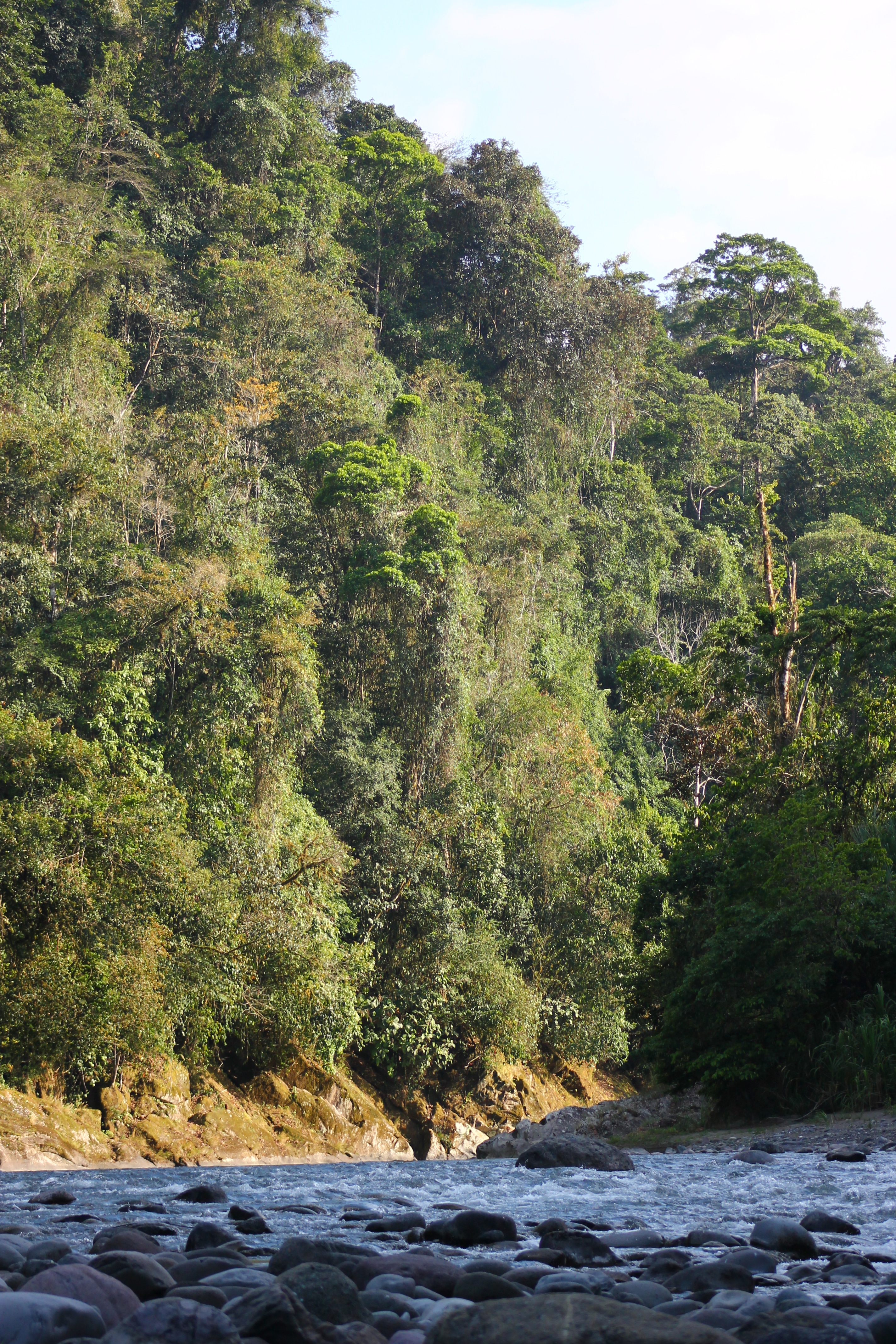
Jungle describes the dense, tangled, nearly impenetrable vegetation that forms wherever light reaches the ground. Jungles grow on the fringes of rainforests, along riverbanks, in naturally disturbed areas caused by storms or floods, and anywhere the canopy has thinned or been cleared.
The result is a wall of vines, shrubs, ground plants, and low-growing trees fighting for the available light. Jungles are harder to navigate on foot but rich with visible wildlife at close range.
The simplest way to remember it: a rainforest creates a jungle when light gets in.
Is Costa Rica a Jungle or a Rainforest?
Costa Rica is both, and neither term fully captures the country’s ecosystem variety. The country spans just 0.03 percent of the Earth’s surface yet contains close to 6 percent of all known species on the planet. That extraordinary concentration of biodiversity exists because Costa Rica is home to six distinct forest types, not just one. Rainforest, jungle, cloud forest, tropical dry forest, mangrove, and riparian forest all exist here, often within a few hours of each other.
More than a quarter of the country’s national territory is protected land. More than half of Costa Rica is forested. Because of that conservation commitment, the rainforests remain intact enough that genuine jungle conditions are relatively less common than in countries where deforestation has been more extensive. Where rivers cut through the forest, where storms have toppled trees, and where national parks border agricultural land, the jungle thrives at the edges.
The Jungle
Amid the wilderness of Costa Rica is the jungle. It’s a dense forest comingled with trees and vegetation. The trees grow close together, and leafy vines seem to connect the dots. Animals have free range, roaming among the trees or through the wealth of plants that create a thick groundcover. The jungle is also filled with the sounds of wild animals singing, chattering and calling to each other amid the rustle of leaves and flowers. Humans find it more challenging to navigate, but it’s quite a sight to see. One of the most exhilarating ways to view the jungles of Costa Rica is to take a zipline ride over these scenic forested areas. Whitewater rafting on the Pacuare River is another option.
Had an incredible week with Costa Rica Rios! The adventure had the perfect amount of adventure and rest. We explored the beauty of the country’s rural areas and connected with a bunch of amazing local guides. Highly recommend traveling with this company.
We are a family group of 10 - two 70-yr old grandparents, three adults in their 40s and 5 grandchildren, between the ages of 12 and 17. Costa Rica Rios did a wonderful job helping us organize a great 9-day vacation. We chose lots of activities (teenagers love that!), and Costa Rica Rios did all the leg work, providing transportation from the airport, between the 2 hotels we chose, and to all of the activities - from our hotel. All the drivers were great, and we really appreciated not having to navigate some of the bumpy roads ourselves. The tour guides at all the sites were just wonderful! They were friendly, spoke English well, and kindly answered our many questions! You can tell that they love Costa Rica, and are so eager to preserve all the natural beauty there! We chose two locations: La Fortuna and Manuel Antonio These are the activities we chose and enjoyed! La Fortuna - Nature Safari Float, Hanging Bridges and Canopy Zipline Tour, Horseback Riding to La Fortuna Waterfall, Coffee and Chocolate Tour Manuel Antonio - Manuel Antonio Nat. Park Private Guided Tour, Half-day Sport Fishing, Manuel Antonio Beach, ATV tour The two hotels that they selected for us were just wonderful! Beautiful landscaping, nice rooms, excellent restaurants. La Fortuna - Hotel Los Lagos Manuel Antonio - Hotel Costa Verde I was a little concerned that we might get a LOT of rain, since it was in the rainy season. We had some rain, but it didn't hinder the fun that we had! Lots of beautiful memories of a great family time! Thank you Costa Rica Rios!
I just wrapped up my second adventure with Costa Rica Rios and I can’t say enough good things. Henry (aka Ninja) and Michael, along with the entire crew, are the absolute best at what they do. From the moment you arrive, you feel like family — they handle every detail with so much care, humor, and local wisdom.
Every day was packed with jaw-dropping adventures: river rafting, kayaking, zip lining, waterfall rappelling — you name it. They balance safety and adrenaline so perfectly that even when you’re pushing your limits, you feel completely looked after.
This trip is off-the-grid magic. Great food, stunning scenery, and a team that loves what they do and makes you love every second too. If you’re thinking about booking — do it! I came back for my second year in a row, and I’d do it again in a heartbeat.
We just got back from Costa Rica -- it was fabulous AND stress free thanks to Costa Rica Rio. We usually arrange our own trips and activities but we were so happy that we traveled with Costa Rica Rio this time. Everything happened as scheduled at top notch venues and on time, every time. Frasier revised our trip four times to get it exactly right and within our budget. Costa Rica Rio deserves 10 stars.
Response from the owner
1 year ago
Thanks for the incredible review, Connie and it's so nice to hear that you loved your vacation. Pura vida!
If there were more stars to give, I would give them!! 100% the best adventure vacation we've ever been on!! There were 6 of us on the tour of varying abilities, and we all had an epic time! Henry and Michael were the best guides ever: knowledgeable, skilled, and funny! The rafting was spectacular, the zip lining and Tarzan swing were perfect for the adrenaline junkies among us, the tour at Manuel Antonio NP gave us a chance to see a ton of animals, and the sea kayaking was beautiful. Highly recommend this tour company! We didn't want the vacation to end. Pura Vida!
Response from the owner
1 year ago
Thanks for the fantastic review, Misty! It's so nice to hear that you loved your vacation with us. Pura vida!
My family of 5 (mom, dad, 3 sons who are 21+) had the BEST trip ever. We've been on various adventure tours but this one was the absolute BEST! We were met at the airport by a very friendly guide. We waited a short while for one other group participant to arrive and then were driven a few hours to Villa Florencia. This was a beautiful resort with a restaurant, pool, work out area and many places to relax. We arrived at around lunchtime and needed to arrange a lunch with the restaurant staff as this was not provided. Food was provided from dinner that first night through breakfast on the last day. Each night all week, our fearless leader briefed us on what to expect the next day. We went kayaking, zip-lining, whitewater rafting for 2 days on #1,2,3,4 rapids, hiking, tarzan swing, repelling down a handful of waterfalls, walk in animal sanctuary, morning at the beach and shopping. There's probably more I'm forgetting as the schedule was very packed. My favorite place was the ECO Lodge without electricity where the view and experience was spectacular. We traveled with a group of 13 people (including our family) in a van with our Leader and Driver. We all got along very well and had a great time together. It didn't take long for us to feel like a family. The food was great, accommodations also great (some had more bugs than others but hey, this is Costa Rica - there are bugs!) I recommend a few things: listen to your guide and you will have a much better time - when traveling, when adventuring, when given safety warnings and for all things Costa Rica. Bring a watertight sealed bag for your camera to wear around your neck so you can take pictures in all settings. Bring a pair of binoculars for animal viewing. Bring good water shoes that you can also hike in, and another pair of shoes that can get wet and muddy along with flip flops and something else. I was glad I brought 4 pairs of shoes to wear. One pair gets wet and you will have another to wear. They do not necessarily dry out overnight. Bring lots of t-shirts and shorts for the same reason. You will go through clothing. Bring rain gear. Not much need for dress-up clothes although you might want something clean for restaurants and a possible trip to a bar. There's not much opportunity to wash/dry clothes. Bring sunscreen and bug spray. There is some time for relaxing in the evenings before and after dinner. Bring the stuff on the list you are given. Keep in mind that at the end there is an expectation to tip guides 5-10% of the total per person in cash. An envelope is given out for this purpose. It was our understanding that guides would be given % dependent on how much contact they had with the group all week. There are ATM's in town that you can access the day before you leave. I highly recommend this trip for adventurous people who are tolerant of bugs and who love to see the world and meet other adventurous people. Excellent trip we will have a hard time topping elsewhere!
Response from the owner
2 years ago
Thanks for the amazing review Teresa! It's so nice to hear that you and your family loved your vacation with us. Pura vida!
Wonderful Accommodations and transportation . Great food! Week of Adventures was amazing. Fun River paddles, hiking , zip lining and rappelling waterfalls. Great guides on the water and land. Wonderful country and people 💖
Response from the owner
2 years ago
Thanks for the fantastic review, Susan and it's great to hear you loved your vacation with us. Pura vida!
They were fantastic to work with. I had MANY questions before booking our trip and even during our trip. They always got back to me very quickly and had very thorough answers. I also changed my plans for the trip and they were able to smoothly make a new itinerary. The transfers were safe and efficient and on time. All excursions were fun!! I highly recommend Costa Rica Rios!
Response from the owner
2 years ago
Thank you for the lovely review, Danielle and it's so nice to hear you enjoyed your vacation. Pura vida!
I have no doubt that Costa Rica Rios is one of the best adventure companies in Costa Rica! Everything from start to finish of the adventure tour was executed so smoothly and so perfectly. This company and their guides are extremely professional, experienced and work to ensure your safety and comfort 100% of the time. Experience level is not a concern for them, and they will complete all the activities to fulfill your needs. The guides we had were all local, and had decades worth of experience in kayaking, rafting, hiking, climbing, etc.. They all spoken English fluently and shared beautiful stories and facts about the surrounding areas of Turrialba, CR. The accommodations we stayed in were amazing, especially the Eco Lodge which sits alongside the Pacuare River. The food was fantastic and locally sourced. The airport pickup, drop off and all other transportation in between was so punctual and so smooth. I would recommend this tour to anyone who is visiting Costa Rica! It is a beautiful and fun way to see the country off the beaten path and get to know some of the locals and some other travellers. As a young solo female traveller, I felt extremely safe and well taken care of by Costa Rica Rios. I’ll be back!
Response from the owner
2 years ago
Thank you for the amazing review Hillary and it's so nice to hear that you loved your vacation with us. Pura vida!
Usually my wife and I plan our vacations ourselves, so this was our first time using a travel agency. Costa Rica Rios put together a personalized trip for us based on our budget and interests and it all went way better than I expected.
The accommodations were lovely, the activities and guides were all excellent and having the transportation pre-arranged was a huge convenience. Everyone was on time to the minute.
Particularly nice was that all activities (and even transportation) were private -- just me, my wife and the guide or driver. I wasn't expecting that, especially on a whitewater rafting trip! That made the activities feel more personal and special.
Response from the owner
3 years ago
Thanks for the great review Seth and it's so nice to hear you enjoyed your vacation. Pura vida!
Our family of six (parents plus four adolescents) went on the Week of Adventures! We had the most amazing time on the adventures, as well as enjoying typical Costa Rican food and learning about "Tico" culture. Our guides were knowledgable, attentive and enthusiastic, and they were completely focused on our safety during all of the adventures. We had plenty of time to rest at the wonderful hotels (we especially loved the Eco-lodge) and we enjoyed the kayaking, zip-lining, rafting, snorkeling and canyoning thoroughly! The landscape in Costa Rica is absolutely stunning and we loved every moment of this incredible adventure! Thank you, Henry (AKA "Ninja"), Paolo, Jeffrey, Gustavo, and Manuel for taking such great care of us in your beautiful country!
Response from the owner
3 years ago
What a fantastic review thanks, Christine. It's so nice to hear that you and your family enjoyed your vacation and we hope to see you again at some point in the future. Pura vida!
This trip was our first big trip together and I was super nervous on how to plan it. What if things went wrong, what if I missed our flight, etc. Costa Rica Rios helped with practically everything except packing my bags. Great communication, great recommendations. Everything we had booked for us was an amazing experience. If we could, we'd use this company for every place we'd go to all over the world.
We absolutely LOVED our trip with Costa Rica Rios. Our group was led by Manuel who was INCREDIBLE! We could not have asked for a better set of guides and drivers. Raul, Ronnie, Emanuel, Carolina, Pablo, and Randall we LOVE you! Costa Rica Rios provided an amazing tour and exceeded all of our trip expectations. We were met at the airport with snacks, water, juice, and beer! From that point on we fell in love with Turrialba, especially those tortillas! The views are breathtaking, the beach so fun, and the rivers amazing. The Pacuare Eco Lodge is a refreshing breath of fresh air off the beaten path and supplied with the best cooks (guides) ever. You will never go hungry on this trip. We saw so many sloths, toucans, frogs, snakes, birds, and more! The Week of Adventures is truly designed with everything you want in mind and executed flawlessly. There were plenty of activities but also ample down time to hang out and chill. We loved all of the food, the people, the country, everything. We cannot say enough good things about this local company. Until we see you again family, Pura Vida!
The rainforests of Costa Rica are similar to the jungle, but they have layers. There’s little vegetation on the ground except where the stray ray of sun shines through. You won’t find the dense tangle of plants and vines growing under your feet the way it is in the jungle. Instead, there’s a high canopy of treetops that shields the sun from peeking through. Vines climb up long tree trunks to reach the sunlight. This is where the vast majority of rainforest animals live. In this setting, trees can range from 60 feet tall to well over 100 feet. A lower canopy of treetops blocks out sunlight below 60 feet, creating a humid environment. The cool breezes rarely
The Animalsbreak through this layer, but the sounds of the busy animal kingdom in the treetops filters down below and fills the air. It’s much warmer on the ground. The moist hot air creates a lush environment for ferns and flowers in this tropical setting. Rodents and reptiles roam the ground in this rain-soaked environment, which is dotted with rivers, streams and waterfalls.
Much of the wildlife is the same in canopies of the jungle and rainforest. Monkeys, macaws, anteaters, snakes and sloths are just a few of the wild animals found in the Costa Rican jungle. A trek through the rainforest also reveals various species of birds, monkeys, snakes and sloths. Creatures like the peccary, lizards, tree frogs and an assortment of cats and rodents also roam the jungle and rainforest, foraging for food and water.
The Four Layers of a Costa Rican Rainforest
Understanding the structure of the rainforest makes any visit far more rewarding. Rather than a single undifferentiated wall of green, a tropical rainforest is organized vertically into four distinct layers, each functioning as its own habitat.
The Emergent Layer
This layer sits at the very top, where the tallest trees push above the main canopy and can reach 130 feet or higher. Harpy eagles, large bats, and butterflies are the primary residents of this zone. The wind is stronger here, which helps with seed dispersal.
The Canopy Layer
This layer forms the roof of the forest, typically between 60 and 100 feet above the ground. This is where the vast majority of Costa Rica’s wildlife spends its life: howler monkeys, spider monkeys, three-toed sloths, scarlet macaws, toucans, and hundreds of bird species all live and feed here. Up to 90 percent of all rainforest creatures are found in the canopy or above it.
Costa Rica’s remarkable wildlife diversity across its forest layers is one of the many reasons why visiting its iconic animals in their natural habitat ranks among the most sought-after experiences in the country.
The Understory Layer
This layer exists between the canopy and the forest floor. It receives very little direct sunlight, staying dim and humid. Smaller trees, young trees reaching for light, tree frogs, many snake species, and shade-tolerant plants thrive in this zone. Leopards and ocelots move through the understory hunting for prey.
The Forest Floor
This layer is the lowest layer, receiving less than 2 percent of the available sunlight. Decomposition happens rapidly here due to heat and humidity. Tapirs, jaguars, peccaries, leafcutter ant colonies, and an extraordinary variety of beetles, fungi, and invertebrates call this layer home.
The Animals
Much of the wildlife is the same in the canopies of the jungle and rainforest. Monkeys, macaws, anteaters, snakes, and sloths are just a few of the wild animals found in the Costa Rican jungle. A trek through the rainforest also reveals various species of birds, monkeys, snakes, and sloths. Creatures like the peccary, lizards, tree frogs, and an assortment of cats and rodents also roam the jungle and rainforest, foraging for food and water.
A jungle or a rainforest can grow naturally, creating an ecosystem where plants and animals thrive. When part of a rainforest is cleared, however, rays of sunlight encourage growth of vegetation across the ground, creating a jungle instead.
Costa Rica is home to four species of monkeys: the howler, spider, white-faced capuchin, and squirrel monkey. Spotting all four species on a single trip is entirely possible with the right itinerary, and birding enthusiasts will want to note that Costa Rica holds more than 900 recorded bird species across its forest types.
Two species of sloth share the canopy. At the larger end of the wildlife spectrum, Corcovado and the Osa Peninsula support populations of jaguars, pumas, ocelots, Baird’s tapirs, and the endangered harpy eagle.
Reptile life is equally rich, with crocodiles, caimans, more than 150 snake species, and hundreds of lizard species distributed across the country’s ecosystems. Poison dart frogs, red-eyed tree frogs, and glass frogs are among the roughly 170 amphibian species found here. Costa Rica holds more than 900 recorded bird species, which represents approximately 10 percent of all bird species on Earth.
The Six Forest Types of Costa Rica
Costa Rica’s ecological variety goes well beyond the jungle and rainforest distinction. Six distinct forest types exist within the country’s borders, and understanding each one helps travelers choose the right destination for what they want to see.
Lowland Tropical Rainforest
Found at elevations from sea level to about 2,000 feet, these forests are what most visitors imagine when thinking of Costa Rica: towering trees, multi-layered canopies, high humidity, and dense wildlife. Rainfall can exceed 200 inches annually in the wettest areas. Premier examples include Tortuguero National Park on the Caribbean coast and Corcovado National Park on the Osa Peninsula.
Premontane and Montane Rainforest
Located between 2,000 and 5,000 feet on mountain slopes, these forests experience cooler temperatures and heavy rainfall year-round. Braulio Carrillo National Park, northeast of San José, protects a vast stretch of montane rainforest and is home to 515 recorded bird species, including the resplendent quetzal.
Cloud Forest
Developing above roughly 4,500 feet, cloud forests are wrapped in mist and low clouds almost daily. They feel distinct from lowland rainforest—cooler, quieter, and heavily draped in mosses, bromeliads, and orchids.
Trees are shorter and gnarled. The most famous example is Monteverde Cloud Forest Reserve, which hosts over 400 bird species, more than 100 mammal species, and around 3,000 plant species. Other notable cloud forests include Los Quetzales National Park and the upper zones of Chiripo National Park.
Tropical Dry Forest
Concentrated in Guanacaste Province and the Nicoya Peninsula, these forests endure a pronounced dry season from November through April, during which many trees shed their leaves. The Guanacaste tree, Costa Rica’s national tree, is the signature species. Wildlife spotting is easier in the dry season as animals gather near water sources. Santa Rosa National Park protects the largest remaining stand of tropical dry forest in Central America.
Mangrove Forest
Mangroves form where freshwater rivers meet the ocean, creating brackish ecosystems with partially submerged root systems. They serve as nurseries for marine species and nesting grounds for birds, sloths, crocodiles, and tropical cats.
Notable mangrove systems include the Sierpe-Terraba wetlands near the Osa Peninsula, the Damas Island estuary near Manuel Antonio, areas around Tamarindo and Las Baulas National Park, and Gandoca Manzanillo Wildlife Refuge on the Caribbean coast. Kayaking offers the most rewarding way to explore them.
Riparian Forest
These forests grow along riverbanks, where water availability supports dense vegetation even in drier regions. They are prime spots for wildlife sightings, as animals come to drink and feed. The Tarcoles River inside Carara National Park on the Central Pacific coast is especially famous for its population of American crocodiles, some reaching lengths of over 20 feet.
Where to Find the Jungle and Rainforest in Costa Rica
Not every forest area offers the same experience, and the difference between jungle and rainforest becomes tangible once you arrive at the right location. Below are the destinations where each ecosystem is most dramatic and accessible.
Widely regarded as the most biologically intense place in Central America, Corcovado covers nearly half of the Osa Peninsula and contains one of the largest intact lowland tropical rainforests in the region.
It is home to all four Costa Rican monkey species, scarlet macaws, tapirs, jaguars, and the endangered harpy eagle. Access is restricted to guided tours, keeping visitor numbers low and wildlife sightings high. Gateway towns include Drake Bay and Puerto Jimenez.
Often called the “Amazon of Costa Rica,” Tortuguero is a maze of canals, rivers, and jungle channels accessible mainly by boat or small plane.
Dense riverbank vegetation creates prime jungle conditions where howler monkeys, anteaters, caimans, and sloths are commonly seen. It is also the most important nesting site for the Atlantic green sea turtle, with nesting season from July through October.
At over 4,600 feet of elevation, Monteverde offers a dramatically different forest experience. Cool air, moss-draped trees, orchids, and the resplendent quetzal define the environment.
The reserve protects 26,000 acres of cloud forest and connects to the Children’s Eternal Rainforest, the largest private nature reserve in Costa Rica at 54,000 acres. Visitors can explore through hanging bridges, guided canopy walks, and night tours.
Manuel Antonio National Park, Central Pacific
Costa Rica’s most visited national park combines rainforest and secondary growth jungle, making wildlife highly visible along its trails. White-faced capuchin monkeys, two-toed sloths, squirrel monkeys, and dozens of bird species are reliably spotted. Trails lead directly through forest to pristine Pacific beaches, offering one of the most varied short hikes in the country.
Carara National Park, Central Pacific Coast
Situated at the transition zone between tropical dry forest and rainforest, Carara hosts unusual biodiversity in a compact area. It contains one of the largest remaining populations of scarlet macaws on the Pacific coast. The bordering Tarcoles River is famous for enormous American crocodiles, best viewed on river cruises or guided hikes.
Sarapiqui and La Selva Biological Station, Northern Lowlands
This region offers some of the most accessible and scientifically documented rainforest in Costa Rica. La Selva Biological Station has been a hub of ecological research since 1954, with trails passing through undisturbed primary rainforest. Wildlife highlights include great green macaws, poison dart frogs, and river otters. The Sarapiqui area connects to Braulio Carrillo National Park, allowing travelers to experience forest transitions across elevations within a single trip.
The Cloud Forest: A Third Ecosystem Worth Understanding
Cloud forests are distinct from both lowland rainforest and jungle. They form at high elevations where moisture-laden trade winds rise against mountain ridges, cooling and condensing into a near-permanent mist that envelops the forest.
Atmosphere and Plant Life
The environment feels ancient and otherworldly. Tree trunks and branches are covered in mosses, liverworts, and bromeliads. Orchids thrive on nearly every surface, with Monteverde alone documented to host over 500 species. Persistent moisture keeps the forest cool and green year-round, even during the dry season at lower elevations.
Wildlife of the Cloud Forest
Animal life here differs from lowland ecosystems. The resplendent quetzal, one of the most striking birds in the Western Hemisphere, lives almost exclusively in cloud forests, feeding on wild avocado fruits. Other unique species include bare-necked umbrellabirds, three-wattled bellbirds, and numerous highland hummingbirds. Mammals such as the mountain tapir and the oncilla, a small highland cat, are also more commonly encountered in these zones.
Best Time to Visit
Monteverde’s cloud forests are most accessible during the dry season from December to April, when trails are in better condition and the forest is less heavily clouded. However, visiting during misty conditions offers a uniquely atmospheric experience, with drifting fog weaving between tree trunks—something not found at lower elevations.
What to Expect When Visiting: Practical Preparation
Both jungle and rainforest environments reward preparation. A few practical points make a significant difference in the quality of the experience.
Clothing and Footwear
Prioritize function over style.
Quick-drying synthetic fabrics are preferable to cotton, which stays wet for hours.
Long-sleeved shirts and light trousers protect against mosquitoes, biting insects, and sun exposure.
Sturdy closed-toe hiking boots or trail shoes with grip are essential.
Flip-flops and casual sneakers are unsafe on wet roots and muddy slopes.
Sandals are best reserved for the beach.
Rain Gear
Necessary in all seasons.
Even during the dry season, brief afternoon showers occur regularly inside forests.
A lightweight, packable rain jacket is essential.
Dry bags or zip-lock bags inside a daypack protect cameras, phones, and documents.
Sun Protection
Ultraviolet intensity is high due to proximity to the equator, even on overcast days.
Reef-safe sunscreen, wide-brimmed hats, and UV-protective clothing are practical choices.
Especially important when transitioning between forest and open coastal areas.
Bug Protection
Use repellents containing DEET or picaridin, especially in lowland rainforest areas near standing water and during evenings.
Mosquitoes in some regions carry dengue fever, though risk is generally low in well-maintained lodges.
Prevention is straightforward and effective.
Value of Guides
Certified naturalist guides elevate a forest walk into an educational experience.
They spot wildlife that visitors often miss, such as sloths, poison dart frogs, and leafcutter ants.
Hiring local guides also supports community economies in conservation zones.
Best Time to Visit
Pacific Side (Manuel Antonio, Carara, Osa Peninsula): Driest from December through April.
Caribbean Side (Tortuguero): Rain year-round, with relatively drier periods in March and September–October.
Cloud Forests (Monteverde, Chiripo): Most accessible between December and April.
Lowland Rainforests: Lush and active year-round, with improved trail conditions during the dry season.
Frequently Asked Questions: Costa Rica Jungle vs. Rainforest
Is Costa Rica a jungle or a rainforest?
Costa Rica contains both ecosystems simultaneously. The country’s protected lowland forests, including Corcovado and Tortuguero, are tropical rainforests defined by multi-layered canopies, minimal ground vegetation, and most animal life concentrated high in the trees.
Jungle conditions develop at forest edges, along rivers, and anywhere sunlight reaches the ground and promotes dense undergrowth. Costa Rica also contains cloud forests, tropical dry forests, and mangroves, making it one of the most ecologically diverse countries on Earth relative to its size.
What is the main difference between a jungle and a rainforest?
The primary distinction is light and the vegetation it produces. A tropical rainforest has a dense, closed canopy of very tall trees that blocks almost all direct sunlight from reaching the forest floor. Because of this, ground-level vegetation is sparse and the forest is relatively easy to walk through.
A jungle forms where that canopy thins or breaks, allowing sunlight to stimulate explosive ground-level plant growth. The result is thick, tangled, and often nearly impenetrable undergrowth. In practical terms, a jungle is harder to navigate on foot than a rainforest.
What animals live in Costa Rica’s jungle and rainforest?
Costa Rica’s forests collectively support over 500,000 species, though only a fraction have been formally documented. Mammals include four monkey species (howler, spider, white-faced capuchin, squirrel), two sloth species, tapirs, jaguars, pumas, ocelots, anteaters, peccaries, coatis, and deer. Bird diversity exceeds 900 species.
Reptiles include caimans, American crocodiles, more than 150 snake species, and hundreds of lizard types. Amphibians number around 170 species, with red-eyed tree frogs and poison dart frogs among the most recognizable. Insect diversity is so vast that scientists estimate large numbers of species remain undescribed.
What is the best rainforest to visit in Costa Rica?
Corcovado National Park on the Osa Peninsula is consistently cited as the most biodiverse and pristine rainforest in Central America. Tortuguero National Park offers a different but equally extraordinary experience via its canal system.
Braulio Carrillo National Park is the most accessible primary rainforest near San Jose. Manuel Antonio is the best choice for first-time visitors who want a short, wildlife-rich forest walk combined with a beach day. Each park provides a different balance between remoteness, biodiversity, and accessibility.
Is there a real jungle in Costa Rica?
Yes. True jungle conditions, meaning dense ground-level vegetation that is difficult to navigate without a machete, exist in Costa Rica particularly along rivers, around the edges of primary forest, and in secondary growth areas where the original forest canopy was cleared and is regenerating.
The Tortuguero canal system, the riverbanks of the Pacuare, and the fringes of Corcovado all show genuine jungle characteristics. However, because Costa Rica’s forest conservation has been so effective, much of the country retains its full rainforest canopy, keeping jungle growth to the margins rather than the interior.
What plants grow in Costa Rica’s rainforest?
Costa Rica’s rainforests contain an estimated 12,000 plant species. Each square mile of lowland rainforest holds approximately 400 species of flowering plants and around 200 different tree species. Commercially recognizable trees include mahogany, Spanish cedar, and tropical balsa. The forest also supports over 1,400 orchid species, more than 800 fern species, and hundreds of bromeliad species.
Epiphytes, plants that grow on other plants without rooting in the soil, are extraordinarily diverse here, covering tree trunks and branches with mosses, lichens, and air plants. The strangler fig is one of the most ecologically important trees in the rainforest, germinating in the canopy and gradually encasing its host tree as it grows downward.
What is a cloud forest and how is it different from a rainforest?
A cloud forest is a high-elevation tropical forest that receives moisture primarily through cloud immersion rather than rainfall alone. At elevations above roughly 4,500 feet, prevailing winds push moist air against mountain slopes, where it cools and condenses into persistent mist.
This keeps the forest saturated year-round and creates growing conditions that support extraordinary moss, orchid, and bromeliad diversity. Temperatures are cooler than in lowland rainforest, tree canopies are lower and more open, and the overall atmosphere is dramatically different.
The wildlife also changes: the resplendent quetzal, the three-wattled bellbird, and the mountain tapir are cloud forest species not reliably found in lowland rainforest.
What should visitors wear in a Costa Rica rainforest or jungle?
Quick-drying synthetic clothing, a lightweight rain jacket, closed-toe hiking footwear with good grip, DEET-based insect repellent, reef-safe sunscreen, and a small dry bag for electronics are the core preparation items.
Long sleeves and trousers provide meaningful insect protection during dawn and dusk hours when biting insects are most active. A hat with a brim protects against both sun at forest edges and light rain while on the trail.
A jungle or a rainforest can grow naturally, creating an ecosystem where plants and animals thrive. When part of a rainforest is cleared, however, rays of sunlight encourage growth of vegetation across the ground, creating a jungle instead.
If the idea of trekking through the jungle or wandering through the rainforest intrigues you, it might be time for a visit to Costa Rica. At Costa Rica Rios, we help people plan vacations andhoneymoons with as much or as little adventure as you like. Check out ourphoto gallery from The Jungle Lodge on the Pacuare River to see some of the unique tropical scenery you can encounter on your trip.
Turrialba is a small agricultural town in the heart of Costa Rica that has largely been left unaffected by the vast number of tourism flocking to other parts of the country. That is not to say it is uninteresting or has nothing to offer! On the contrary, this little town has many treasures to enthrall the discerning traveler. Nestled in a valley, surrounded by primary and secondary rainforest, one of the most active volcanoes in Costa Rica to the north, as well as the highest volcano in the country, and with the highest mountain on the horizon to the south, its beauty is unquestionable. Located just 1.5 hours form the capital city of San Jose, Turrialba is worlds away from the hustle and bustle.
If your idea of a Costa Rica adventure vacation includes meeting locals and getting a feel for the culture, then this is the destination for you. Its warm and welcoming community is friendly and fun, always rising to the occasion when there is something to celebrate. It seems nearly every second weekend there is something going on, from a mountain bike race to runs to cultural festivals and fairs. It’s also the hub for many indigenous people, who come in for their weekly market shopping and other necessities.
There are no large chain hotels, but several smaller boutique lodges that cater to almost any budget. So if you want luxury on your family vacation or adventure honeymoon, you can still get it in Turrialba.
Turrialba is also the gateway to many adventures. With more than 22 canyons in and around the town, canyoning has become one of the most popular adventures in the area. The beautiful thing about the canyons here, is that the tours all run on a “leave no trace” policy, meaning that when you are rappelling down waterfalls there are no fixed points and all the ropes are set up at each drop by your expert guides
There are numerous mountain biking trails for enthusiasts, and you could fill your entire Costa Rica adventure vacation with a different trail every day. And the hiking is incredible. There are many private and public reserves to visit including a UNESCO Natural Heritage site just a 20-minute drive from downtown. Due to the low number of visitors to the national parks around here, there is a lot of wildlife. We have been lucky to see the shy and rare Tayra twice this year, as well as an abundance of sloths, toucans and many other exotic creatures. No Costa Rica vacation is complete without a little wildlife!
The most important archaeological site is also located here and is a wonderful place full of mystery and intrigue. You’ll be able to learn about the pre-Colombus people and their way of life. Dotted all around the valley are relics from the past and many stone carvings and artefacts.
Turrialba is best known as the gateway to the Pacuare River, home of the best whitewater rafting in the country and some of the best whitewater in the world. National Geographic voted this river “one of the top 10 commercially rafted rivers in the world”. There are two ways to raft the Pacuare: A one-day trip that leaves early in the morning and has you off the river by mid-afternoon, or an overnight excursion where you will spend a night or two in a beautiful and remote jungle lodge. An overnight in one of the Pacuare River’s lodges is generally a highlight of any Costa Rica trip.
An unusual fact about Turrialba is that it is home to the Rawlings baseball factory, and every baseball used in Major League Baseball in the USA is made here in this town. The factory produces 50,000 handmade baseballs every week to be shipped to the USA! Also hosted in the town is the world coffee bean bank. This means that if a crop of coffee, anywhere in the world, was to be wiped out due to plague or other phenomena, we have the original strain ready to start the replenishment. If you like your family adventure vacation to include a little education, this is a great place to start.
So if you are planning your honeymoon or your annual family adventure vacation, why not get away from the crowds and experience a little bit of the “real” Costa Rica? We would suggest at least a two-night stay in the Turrialba area before moving on to your next destination.
To see how Turrialba could fit into your next vacation plans, contact us for more information. You won’t be disappointed.
When making your Costa Rican vacation plans make sure that you include a visit to Manuel Antonio on the Pacific Coast. It’s one of the premier beach destinations in Costa Rica. It boasts all the amenities you would expect. From backpacker style accommodations to luxury hotels (and everything in between), Manuel Antonio has it all.
So what drives so many people to Manuel Antonio?
It has some of the best beaches in the country and one of the best, and most accessible, National Parks. It’s an easy 3-hour drive from San Jose and the international airport.
Manuel Antonio National Park was established in 1972 and is Costa Rica’s smallest park. In 2011, it was awarded the distinction of one of the world’s “Top 12 Most Beautiful Parks” by Forbes magazine, and for the many visitors who passed through the park’s gates before then, it came as no surprise.
There are four beaches within the park itself, Manuel Antonio, Espadilla Sur, Teloro and Playita, that have well-marked trails making for easy access.
If beaches are not your thing, then maybe the wildlife is. The park has 109 species of mammals and 184 species of birds within its borders.
You are almost guaranteed to find both types of sloths and 3 of the 4 species of monkeys found in Costa Rica – Howler, Squirrel and White Headed Capuchin).
Other than the National Park, Manuel Antonio is a magical playground for families, newlyweds and solo travelers alike. There are endless options to keep yourselves occupied, with some of the most popular activities being snorkeling, jetski riding, surfing, ziplining or simply lying on the beach and relaxing.
So why not include Manuel Antonio in your itinerary? It’s one of the most famous destinations in Costa Rica. Contact us today to see how Costa Rica Rios can help include it in your vacation package.
My name is Janet. My husband Bobby and I spent two weeks on our honeymoon in Costa Rica in August, traveling over different parts of the beautiful country. We flew into San Jose and were immediately welcomed by the warm air and friendly atmosphere, even at the busy, busy airport!
We spent the first day touring the city and really grasping parts of Costa Rica’s rich history and culture at the museums, which are well located and well managed.
We then packed our bags and traveled a few hours out of the city into the more tropical climate of the Arenal area. Reading about the rainforest and volcano just doesn’t do them justice. Vibrant colors and fascinating sounds filled our eyes and ears as we came to our next stop in Costa Rica’s rainforest. And the volcano is truly magnificent, rising up right next to the town –impressive! Bobby and I stayed in a cozy cabin that had windows that opened and a surrounding balcony with French doors so we could really feel like we were sleeping in the jungle. On the nights that were a bit warmer, we were able to leave the windows and doors open, turn on the fan and listen to the captivating sounds of the rainforest.
While in the Arenal area, we were able to go on a couple of guided tours and do a little ziplining and white water rafting. I was a little worried before we got there because I am not much for heights or water, but our guides for both activities fully explained the equipment and taught us the safety precautions, putting my mind at ease. My husband is an adrenaline junkie, so he wasn’t worried at all. Our raft did not flip once, and we were rafting on class four waters. I was thoroughly impressed! Our ziplining excursion provided beautiful views of the canopy and the spectacular forest as we traveled back to the forest floor. We didn’t have a single a scratch or bruise after our adventures.
The last leg of our trip we spent on the beach at Manuel Antonio, near the national park. After all the adventu
res we had in the rainforest, we decided to spend the rest of our time in Costa Rica relaxi
ng at the beach. We did meet a couple of sloths hanging out, and made friends with the
monkeys playing outside our balcony. Bobby and I loved hiking into the national park to the gorgeous beaches there and, on our last day a couple of monkeys sat in a tree above our heads and playfully tossed nuts at us while we ate our lunch. We found this quite harmless and very amusing. Bobby likes to tell that story. He says it must mean the monkeys didn’t want to see us go. We’re planning to spend many anniversaries in Costa Rica, and one day, if we decide to have children, we will bring them to experience Costa Rica with us. It’s such a wonderful place to visit. I am so glad we chose to spend our honeymoon there.
Costa Rica trips have been lauded for years for displaying natural beauty. What doesn’t always come to mind, though, is the value of learning about a new culture. Nothing helps to expand human experience and bring people together like learning about a locale’s unique culture. Costa Rica is no exception.
The culture of Costa Rica is heavily influenced by settlers who arrived during Spain’s period of colonization throughout the world. Although the Spanish language and many Spanish customs still exist, don’t be fooled. This is not Spain. There is plenty of influence from indigenous tribes whose customs, food and languages still live on with the locals.
One of the most important aspects of Costa Rican culture is called “Pura Vida,” or “pure life.” Although that’s the direct translation, the phrase more accurately means “living well” or “This is living.” It can be used as a greeting, a farewell, or even a response to a question, and it portrays the Costa Rican culture well. Costa Ricans live for fun. Whether it’s good food, dancing or a holiday celebration, the Costa Rican love for food, games, and fun is contagious to just about anyone that visits.
This love of parties and fun, of course, means that Costa Rica is marked by a hospitable and friendly people. Our visitors are typcially welcomed with open arms, and it’s easy to find a place to eat, to shop or just watch the waves and feel welcome. The sand, the sun and the adventure aren’t the warmest part of Costa Rica. When you’re thinking of warmth, you should think of the people.
And who can forget the food? Probably the most important is coffee. It’s custom to drink coffee several times a day, even when it’s very hot outside, so you’ll always be able to find a fresh cup. Fresh fruits and vegetables also feature prominently in dishes like Casado, a mixed-variety plate that takes place as the most common dish served here in Costa Rica.
The Costa Rican culture is like nowhere else on earth. With influences from Spanish settlers and native peoples, as well as a culture that emphasizes fun and adventure, you won’t see this lifestyle anywhere else. The food and drink are unique, and the people are warm and inviting. When it comes to broadening cultural horizons, learning about Costa Rica firsthand is something that simply can’t be replaced.
Contact us to plan a Costa Rica vacation where you can learn more about the culture and customs of our amazing and unique country.
Now mostly enjoyed as an adventure thrill, zip lining was actually an invention of necessity. Using gravity as a power source, workers in remote geographic regions, like China, the Costa Rican rainforest and the Australian Outback, once strung cables between two points to primarily move people and supplies. Oftentimes, zip lines were installed over canyons or rivers where other means of travel were difficult or impossible. The principle is still the same today, although the materials and technology are stronger, safer and just plain better.
Currently, zip lining is also known in various parts of the world as the flying fox, foefie slide, zip wire, aerial runway or aerial rope slide. History shows zip lining referred to by other names, including the flying fox and Tyrolean Crossing. The term “an inclined strong” was used to describe it in the 1897 H.G. Wells novel “The Invisible Man.” Zip lining is a booming area of adventure tourism activity, especially in Costa Rica, where zip lines have been used since the 1970s. Other destinations for great zip lining include Nicaragua, Jamaica, Alaska, British Columbia, South Africa, Thailand, Israel, Spain and the Czech Republic. More than 700 zip line courses are available around the world.
In terms of specifications and safety, zip lines are designed to bear great loads and are safe when used properly. Platforms on a zip line course can hold at least 40,000 pounds. The half-inch wide, galvanized cables used in zip lines have a break strength greater than 22,000 pounds. The pulleys used to connect riders to the line have a break strength that’s more than 14,000 pounds.
Zip line tours in Costa Rica include views of waterfalls, the Pacuare River and rain forest canopy, Arenal Volcano, the Pacific and Atlantic oceans and native wildlife. There are dozens of miles of zip line for adventurers to enjoy.
Contact us to learn more about the zip line options available in Costa Rica.
When you mention Costa Rica, most people may not think of coffee. They envision the warm turquoise waters, pristine beaches or lush tropical rain forests. But Costa Rica also has a thriving coffee industry. And its coffee plantations are a perfect way to immerse yourself into the country’s sights, smells and tastes during your vacation in Costa Rica.
Once coffee was introduced to the nation, its Central Valley quickly became Costa Rica’s coffee-producing center during the late 18th century. The ideal climate and slightly acidic soil provided perfect conditions for the coffee plants to thrive. In only a few decades’ time the number of coffee plantations grew, and exporting to neighboring countries and other continents began.
As word of Costa Rica’s aromatic Arabica blends spread to the rest of the world, so did the country’s export business, which provided a financial boom for the people of this nation. Costa Rica’s growing infrastructure was largely financed by the coffee trade’s success. The “Ferrocarril al Atlantico,” the first railroads to the Atlantic Coast, and the National Theater are often listed as developments made possible by the efforts of the coffee growers.
Today, many coffee plantations in Costa Rica offer tours to educate you on the cultural impact the industry has had on the many facets of life. Whether you live here or your on vacation in Costa Rica, you can learn the entire process of how the beloved, rich cup of coffee is made. Begin with a trip to the growing fields, continue on through a tour of the roasters and conclude by indulging your taste buds with a fresh cup of joe.
Take the opportunity to learn the rich culture and history of the coffee industry in Costa Rica. Contact Costa Rica Rios and let us help you plan your customized adventure vacation.
If there’s one thing that vacationers, honeymooners and adventure enthusiasts agree upon about Costa Rica, it’s that the unspoiled natural environment and the country’s commitment to preserving it make for a memorable experience. The many running and biking trails and events for endurance runners also provide ample opportunities to take in all that there is to see about Costa Rica while getting plenty of exercise, and a race or other trail adventure will leave you feeling like a participant in something truly special. If you’ve never made a vacation out of running – or if you have, but Costa Rica’s still on your bucket list – one of the following trail running events would be a great reason to make it happen in 2014.
The Irazu Volcano 5k, 10k, 21k half-marathon and 42k marathon will be held on Saturday, March 29, 2014. Registration is 185 USD for international participants and 50 USD for locals. The marathon start time is 7 a.m., and all other races begin at 6 p.m. The marathon begins in the town of Tres Rios, just a few miles from the volcano, and the night races take off from San Juan de Chicua, a small town along the Irazu Volcano Trail where all of the races will finish. This is not for the faint of heart. It’s a run uphill toward a volcano, and the race features a gain in altitude of up to 2,360 meters, or 7,800 feet. Most of these races will be relatively easy for someone with a decent mileage base to train for, but a training plan should include lots of hill repeats.
The La Transtica Coast-to-Coast Ultra Trail event will take place from Wednesday, Nov. 19 through Saturday, Nov. 29, 2014. Participants arrive in the capital city of San Jose on Nov. 19 for a couple of days of medical and administrative checks, as well as a chance to look at the crocodiles. Runners head out on Nov. 21 to complete the race. It’s approximately 117k for the adventure race and 198k for the extreme race, in stages of 25k and 40k respectively. It’s a good idea even for experienced trail runners and ultra-marathoners to begin training several months out. Each leg of the race will have between two and four aid stations, and a catered dinner in the town where that stage ends. Runners will go through several towns before finishing in La Transtica for the award ceremony and a well-deserved celebration dinner and overnight hotel stay before being transported back to San Jose.
Costa Rica is the perfect place for runners of all ability levels to explore new surroundings while experiencing a natural environment that’s unlike any other in the world. For the running destination vacation of a lifetime, contact us to book your Costa Rica adventure tour today.
Our good friend Casey with the Tarahumara ultra-marathon runners, at the 2013 La Ruta race, before she won the ladies 52km category.
If you love the sights and smells of blooming flowers, be sure to schedule in some time to see them on your next adventure in Costa Rica. The variety of different climates here make it possible to see a wide range of flower species. When most people think about the different types of flowers found in the wild of Costa Rica, the first one that comes to mind is the orchid. There are more than 1,300 different types found within just 19,730 square miles.
Guaria Morada
The national flower is the guaria morada, a purple orchid believed to bring good luck. Well-known for its generous and shimmering blooms, it grows mostly in elevations between 1,600 and 3,000 feet, and in areas near the Pacific Coast. Guaria morada was once quite easy to spot, but because it became so popular it is now harder to find. The air plants sprout in the wild along tree branches they use mostly for support. Many locals grow them in their front yards for their beauty and for hopes of good fortune. You can catch the light floral scent of the guaria morada orchid during its peak, between January and April.
Scenic Flowers
Although orchids are among the most plentiful flowers in Costa Rica, there are other flowers that will capture your attention, whether you’re driving down the road or you’re out exploring on one of our Costa Rica guided tours.
Cortez Amarillo – This tree has bright yellow blossoms that flower for just a few days during the rainy season, particularly in the Central Valley region. They are a favorite snack among small howler monkeys that roam among the treetops.
Red Ginger – Sometimes called the ostrich plume, the red ginger has red bulbs and tiny white flowers. Believed to be native to Malaysia, it is found in the moist conditions and shady surroundings of Costa Rica. The red plumes are popular additions to floral arrangements.
Dahlia Imperialis –Dahlias grow on shrub-like bushes in the mountains and along the roadside in altitudes from 1,500 to 2,700 feet. These flowers have pale purple or white petals surrounding a large yellow center. They grow about two inches wide and create a beautiful scene when they’re in bloom.
If you love flowers in their natural state, you’ll love the wide range of blooms you can see in any season in Costa Rica. Whether you’re in the city or off the beaten path, the vivacious colors and heady fragrances will capture your attention on your next adventure in Costa Rica.


 Puerto Viejo and Cahuita lie within the province of Limon and are the two main tourist towns of the southern Caribbean coast in Costa Rica. They are like a country within a country (think Texas) and you will feel like you crossed a border somewhere and ended up on a Caribbean island. The culture is very different than the rest of the country, with a more Rasta and Caribbean flair, unique cuisine emphasizing the use of coconut milk, curry and fresh seafood, and a laid back friendly pace of life. They celebrate Carnival, just like in the Caribbean Islands, and the whole province celebrates with a long weekend of partying, extravagant costumes, lots of music and delicious street BBQs.
 The area is a natural habitat for a wide variety of exotic creatures and is home to the famous Sloth Sanctuary. There, they rehabilitate and care for injured or orphaned sloths and try to teach visitors about this extraordinary animals. There is also the Jaguar Rescue center in Playa Cocles that also helps needy animals and is open for morning tours, but in the afternoons they are busy taking the animals into the forest to see which ones are ready to fend for themselves in the “real world.” There are also several national parks and reserves, with well kept walking trails to follow. This is where you will see an incredible amount of Costa Rican wildlife. I have never been to this part of Costa Rica without seeing many monkeys (howler and white-faced) and sloths, as well as tons of exotic birds, iguanas, turtles nesting, some snakes and more. If your Costa Rica adventure vacation is not complete without some wildlife, you should definitely consider a visit to this area.

















 Although orchids are among the most plentiful flowers in Costa Rica, there are other flowers that will capture your attention, whether you’re driving down the road or you’re out exploring on one of our Costa Rica guided tours.


