If your 2020 destination honeymoon plans were derailed, now’s the perfect time to right that travesty! Plan your honeymoon in Costa Rica 2021 with our handy guide to what you can see and do where, when and how.
Countless intrepid couples the world over had to put their Costa Rica honeymoon plans on hold last year due to the COVID-19 pandemic. Given we are now 8 months away from the start of the 2nd honeymoon season – which starts in November – now is the ideal time to pick up that planner again. The COVID situation in Costa Rica improves by the day and entry and travel restrictions are swiftly easing down our shores.
Planning your tailor-made Costa Rica adventure honeymoon could be just the revitalizing action you need, right now, to see you through the rest of the year.
Adventure-filled Costa Rica honeymoons are among the most coveted experiences for newlyweds all over the world and especially genial for those who live in the US and Canada. With an abundance of short and direct flights south and a cacophony of outstanding nature-based experiences, couples can enjoy the kind of ‘honeymoon in paradise’ they’ve always dreamed of.
Offering an unrivaled balance of romance, relaxation and thrills, Costa Rica is the ideal honeymoon destination for couples who dream of something utterly unique. The country offers everything you could ever want in a once-in-a-lifetime experience with your partner in life and adventures: an array of insanely romantic remote eco-lodges, magical rain forests and jungles brimming with exoticwildlife, and an array of outdoor adrenaline sports like whitewater rafting and kayaking, zip lining, mountain biking, snorkeling, diving and so much more.
Aside from jump starting your adrenaline powerhouse, you’ll also find enough luxurious indulgences to make your honeymoon feel super special.
Where Can You Plan Your Costa Rica Honeymoon in 2021?
Costa Rica reopened to international tourism late last year and restrictions have been easing gradually ever since. Couples are welcome to visit our gorgeous country and plan their 2021 honeymoon in any region they wish to discover.
Relying on our decades of experience organizing Costa Rica honeymoons, there are the most popular options:
Arenal & La Fortuna
The jaw-dropping area framing Arenal Volcano is a huge hit with first-time visitors to Costa Rica. Honeymoons in this area can include a stunning choice of adventures, as well as secluded stays and exclusive indulgences. Choose a lodge with unencumbered views of Arenal – the most iconic peak in the entire country – and you’ll feel like you’ve won the honeymoon lottery. Spend your days meandering the trails of the Arenal national park, afternoons soaking in the therapeutic springs of Tabacon and your evenings enjoying candle-lit romantic dinners.
Due to its proximity to Arenal, Costa Rica honeymoons cam easily include these two top destinations. Manuel Antonio is our go-to spot for rewarding seaside adventures like snorkeling, jet-skiing and paddleboarding. The luscious national park offers wildlife watching experiences and all around its unspoiled wilderness, you’ll find exclusive honeymoon lodges that make you feel as if you have paradise all to yourself. If you’d love a truly balanced itinerary with a ‘little bit of everything that makes Costa Rica so special’ then you should definitely consider these top two spots.
On honeymoon vacations in and around Manuel Antonio, we always include a marvelous whitewater rafting excursion on the nearby Savegre River. We consider this to be the ideal whitewater hot-spot for newbie rafters and kayakers and about the best spot in Costa Rica to try this insanely addictive sport for the very first time. Keen to try it out? Then learn all about this and other spectacular whitewater rafting destinations in the country.
This stellar coastal destination is just an hour from the northern airport in Liberia and sits on the north-western coast of the Nicoya Peninsula. It’s the ideal honeymoon destination choice if you’d love your romantic escapade to include seaside adventures primarily, just a little off the well-trodden trail. For world-class surfing, snorkeling, diving, hiking, horseback riding and even deep-sea fishing, Tamarindo is unsurpassed. The beach town and its surrounding wilderness host quite a few stunning resorts so you can also indulge here – although a much more laid-back beachy vibe is the main enticement for a visit.
Osa Peninsula
The remote Osa Peninsula is mostly comprised of the Corcovado National Park – recognized as one of the most biodiverse reserves in the world. If you dream of an authentic and unblemished Costa Rica honeymoon, unplugged from the rest of the world, the Osa is undoubtedly the top choice.
This spellbinding destination is indeed an ethereal place to visit, one defined by its seclusion, smattering of exquisite honeymoon eco-lodges and truly exceptional wilderness experiences. You’ll find no mega-resorts down these hard-to-reach parts, and no overcrowded beach towns bursting with tourists and nightclubs. Instead, Osa Peninsula honeymoons are all about romantic escapades that allow you to disconnect entirely from the hectic pace of your no-doubt modern life. This is the kind of place where rain forest showers are taken outdoors and where you can enjoy an exquisite 5-star breakfast while howler monkeys swing on trees right in front of your private casita terrace.
There’s undoubtedly less stuff ‘to do’ in the Osa when compared with more established destinations around Costa Rica, but it’s this precise untarnished and non-commercialized aspect of the peninsula that makes it so rewarding.
If you’ve always dreamed of reaching a remote luxury lodge by canoe and feeling like you have the Garden of Eden all to yourselves, then consider this your ideal honeymoon choice.
If you were in search of the polar opposite destination to the Osa, then you’d easily settle on the Papagayo Peninsula. This northern Pacific coast hub is chock-full of prized 5* luxury resorts, the kind that makes the cover of luxury travel magazines the world over. Blissful indulgences if the name of the game here although note that responsible and sustainable eco-tourism is very much at the front of all Papagayo’s best experiences. Yes, you’ll find world-class marinas, golf courses and wellness spa resorts in this superb corner of Costa Rica, but you’ll find them all nestled in prime wilderness. Often considered the poster-child for sustainable luxury travel, the Papagayo is an iconic honeymoon choice that’ll leave you dreamily spoilt and revitalized.
Nicoya Peninsula
With such outstanding, laid-back honeymoon destinations as Santa Teresa, Nicoya is all about barefoot romance experiences. As remote and untarnished as the Osa yet easier and faster to reach, this western peninsula is that perfect marriage between unplugged and easily-accessible adventures. Seaside villages are still very authentic in these parts, with many not even boasting asphalted main roads. The array of expats who’ve made this corner of Costa Rica their home, however, it means you’ll still find a gorgeous array of lodges, restaurants and activities on offer.
The southern Pacific coast can easily be considered Costa Rica’s most underrated honeymoon destination. The downside is that you’ve probably never even heard of Uvita and Dominical, right? Well, consider that also the priceless upside. These are some of the most delightful and least crowded and touristed beach towns in the entire country! Choose to spend your Costa Rica honeymoon here and you’ll have the jaw-dropping Marino Ballena National Park as your backyard, and a handful of drool-worthy adults-only resorts that are just the ticket for grown-up indulgences and relaxation.
Pacuare River
The Pacuare River is considered one of the world’s foremost whitewater sports destination and, if you were to ask us, we’d proudly tell you there’s simply no better place to honeymoon if thrilling adventures in sensational wilderness is what you seek. The Pacuare is our favorite playground and the one spot that never fails to impress.
The Pacuare is a spectacle in and of itself and hosts a smattering of truly gorgeous eco-lodges that make for ideal honeymoon escapes. One of our faves boasts a honeymoon cabin immersed in the rainforest with its own private plunge pool and sweet-as-sugar suspension bridge. This is one of the most photogenic spots in the whole country, we think!
We consider the Pacuare the most adventurous honeymoon destination in Costa Rica and you could do no better than to choose it for your special, unforgettable trip.
What should you consider when planning a 2021 Costa Rica honeymoon?
Airport access – Liberia or San Jose?
The best airport to cast off on your Costa Rica honeymoon? The easiest one you can reach! The amazing benefit of such a compact country is that reaching every corner from either one of the two international airports is quite easy – so don’t let your eventual destination be the deciding factor.
We can also help you plan a one-way itinerary. Many couples chose to fly into San Jose and fly out of Liberia, so they can maximize their adventure time and cut down on unnecessarily long transfers if they wish to spend most of their time in the north. This way, they can also swing by the central highlights of the country, making the most of their transfer.
Costa Rica also boasts a bevy of domestic airports so, if in doubt, just tell us what you’d like to do, and where, and we can help you plan a fantastic and time-efficient itinerary.
We find that the best honeymoon itineraries in Costa Rica boast a lovely balance between thrill-seeking adventures and relaxing down-time. Perhaps you’ll choose to go all out for the first three days and then chill out for the next three, or split your days into active mornings and totally laid-back afternoons. Whatever the case may be, fight the urge to pack your entire week full of activities – sometimes, not planning anything except siestas in hammocks and relaxing sundowners is the best plan of all.
If you really must do something every single day, then consider adding low-key activities like sunset sailing tips and hot-spring visits instead of adrenalin-packed sports.
Watch your budget
Destination honeymoons are usually splurge-worthy vacations yet expenses can run through the roof if you book everything separately. This is why our all-inclusive honeymoon itineraries are so popular with couples. You can spend as little as USD 1,350 or as much as USD 4,500 – but, more importantly, you will know exactly what’s included, when and where.
Some of our adventure packages include all breakfasts and only some lunches, whilst others can be absolutely all-inclusive, so you won’t have unexpected (and costly) surprises at the end.
Because the budget is really the last thing you should be worrying about on your Costa Rica honeymoon.
When you build your own honeymoon itinerary, you can choose the activities and places you want most and can skip the extras that might just not tickle your fancy.
Your Costa Rica honeymoon. Your way.
Costa Rica destination honeymoons can be as luxurious or laid-back as you like and all honeymoon itineraries can include as much (or as little) adrenaline-packed adventure as you desire. All of this, arguably in one of the best value-for-money travel destinations in the world.
Visiting Costa Rica in 2018? Thinking about going to Costa Rica in 2026? If it’s your first time or even if you’ve been before, skipping common mistakes matters as much as following good advice. Local insights reveal what trips up travelers, along with what actually works once you’re there.
Here are some invaluable insider’s tips on what NOT to do when visiting this extraordinary, wild and totally unforgettable country.
1. Don’t Feed the Wildlife
One of the most enticing aspects of a Costa Rica vacation is undoubtedly the up, close and personal wildlife encounters which are guaranteed no matter where you go.Monkeys will swing on trees above your breakfast table at the eco-lodge, toucans will gawk and shadow your hikes and sloths will pose for your camera, totally unfazed by your presence. Yet as tempting as it may be to make your wildlife encounters even closer (you know, by handing over that piece of banana) know that you could be doing great damage to both the animal and, potentially, yourself. Wildlife is called that for a reason and their reaction to being handed food will always be unpredictable and potentially dangerous to you. Moreover, a human epicurean handout will detrimentally affect any animal’s self-reliance instincts, causing havoc to their hunting and/or gathering habits. In Costa Rica, feeding the wildlife is highly illegal anyway, so keep your food safely out of eye sight and grab of any wildlife – especially monkeys – you may come across.

2. Don’t Forget to Look Down (When You Walk)
Rain forest and volcano hikes are among the most rewarding activities to pursue in Costa Rica, with an array of animals (in the former) and sights (in the latter) providing a feast for the eyes. Most of the visual feasting, however, will tend to distract your gaze from your walking path and being mindful of this could potentially save you from grief. Snakes and frogs seem to have a knack for crossing walking paths right in front of visitors, which is of course marvelous, except when you’re not really paying attention because you’re too busy looking up at the tree tops trying to spot sloths. Likewise on volcano hikes, uneven ground on walking trails could potentially lead to a sprained ankle, so your attention downwards – to where you put your feet – is quite an important thing to keep in mind.
Snakes and frogs seem to have a knack for crossing walking paths right in front of visitors, which is, of course,e marvelous, except when you’re not really paying attention because you’re too busy looking up at the tree tops trying to spot sloths.
Likewise, on volcano hikes, uneven ground on walking trails could potentially lead to a sprained ankle, so your attention downwards, to where you put your feet, is quite an important thing to keep in mind.
Additional tip: Wear proper hiking boots with ankle support, use a walking stick on uneven terrain, and if you’re focused on wildlife spotting above, stop walking while you look up.
3. Don’t Put On Your Walking Boots Without Checking Them First
Those incredibly colorful spiders and frogs which inhabit Costa Rica’s incredible forests?


Guess what?
They love sneaking into shoes! No matter whether you leave your hiking boots and shoes outside or keep them inside your lodge room, it certainly pays to get into the habit of checking your shoes for uninvited guests before putting them on every morning.
This isn’t just about boots; check all your shoes, even sandals. A quick shake and visual inspection takes 5 seconds and could save you from a painful bite or sting. Also check towels, clothing left on the floor, and bedding before use.
Pro tip: Store shoes in your luggage or a sealed bag at night, and always shake out towels and clothing that have been hanging outside.
4. Don’t Think You MUST Fly Into San Jose
A stay of several nights can feel lively in the capital of Costa Rica. Still, those arriving for brief visits might find it better to land at Liberia International Airport. This airport sits within Guanacaste Province. Reaching key destinations often takes less time from there.
Starting from Liberia might reduce your driving hours significantly when visiting Playa Flamingo, Tamarindo, Rincon de la Vieja, La Fortuna, or the Nicoya Peninsula. This location serves as a practical base for exploring those areas efficiently.
Best times to visit Liberia LIR
Beaches in Guanacaste: Tamarindo, Conchal, Flamingo
Arriving First at Arenal La Fortuna
Shorter Trip Northwest Costa Rica
Best Times to Arrive in San Jose SJO
Caribbean Coast, Puerto Viejo, Tortuguero
Traveling to the southern Pacific areas, including Manuel Antonio, Uvita, andthe Osa Peninsula
Multi-region trip
Better international flight options/prices
5. Don’t Ignore Local Warnings
Active volcanoes are one Costa Rica’s most enticing aspect and although the great majority are extinct, there are still a few highly active peaks which show daily signs of impending eruptions. A fuming volcano is a truly mesmerizing sight yet it can also bring danger, especially when people deliberately ignore local authority warnings to keep away. Don’t ever underestimate the power of Costa Rica’s mighty volcanoes and always follow local directives in case any emergency warnings are issued. Trust that your adventure tour company has your best interest and safety at heart, so rely on their advice.
The first quarter of the year is high season in Costa Rica, a time when glorious sunny skies reign supreme. But if for some reason you can’t make it to Costa Rica right now, don’t be discouraged and don’t, whatever you do, avoid the rain season. From August to November Costa Rica enjoys a healthy dose of rain, yet most showers are concentrated only in a couple of afternoon hours, still leaving you plenty of time to enjoy your chosen activities. Prices decrease dramatically during the rainy season, crowds dissipate and, even if a few areas of the country suffer from flooding and are inaccessible, there are still plenty of forests to visit and volcanoes to climb nonetheless.
Best rainy season destinations: La Fortuna, Monteverde, Caribbean coast (different rain pattern), Osa Peninsula.
7. Don’t Assume Costa Rica is Like Mexico
One of the things that will definitely make locals toot their noses is tourists taking for granted that Costa Rica is just like Mexico. Latin America is not a monolith, and Costa Rican culture, traditions, food, and even the Spanish language are quite different from those of Mexico.
Costa Rica has no army (it has been demilitarized since 1949). Different cuisine (casados, gallo pinto vs tacos, enchiladas). Different Spanish dialects and slang. Different cultural traditions and holidays
Costa Rica is NOT an island, and NOT a U.S. territory (that’s Puerto Rico). Do a little homework before you go; just skimming through the Wikipedia page is a good start! Consciously being culturally sensitive while traveling abroad is a way of showing your hosts that you respect them.
8. Don’t Swim in Rivers or Estuaries
One of the most important safety rules: avoid swimming in rivers and river mouths in Costa Rica. Here’s why:
Crocodiles: Both American crocodiles and caimans inhabit Costa Rican rivers, especially on the Pacific side. The Tarcoles River is famous for massive crocodiles.
Bull sharks: Can swim upstream and have been found in rivers
Pollution: Some rivers, especially near populated areas, may contain sewage
Strong currents: River mouths can have dangerous rip currents
Safe swimming spots:
Ocean beaches (check with locals about conditions)
Designated swimming holes and waterfalls (ask guides)
9. Don’t Walk on Beaches at Night
While Costa Rica is generally safe, isolated beaches at night are risky. Most beaches aren’t well-lit and provide criminals with cover for robberies or assaults. This is especially true for remote beaches or those near populated areas.
Beach safety rules:
Avoid beaches after dark, especially if alone.
Don’t leave valuables on the beach while swimming.
Stay in well-populated beach areas during the day.
Don’t flash expensive jewelry, cameras, or phones.
Be extra cautious in areas known for theft (some beaches near Jaco, parts of the San Jose coast)
10. Don’t Drink and Drive (Zero Tolerance)
Costa Rica has strict drunk driving laws with roadside checkpoints, especially on weekends and holidays. The legal limit is very low (0.05% BAC, lower than most countries), and penalties are severe:
Immediate license suspension
Large fines (up to $500+)
Possible jail time
Rental car company charges.
Your insurance may be voided.
Better options: Use taxis, Uber (in San Jose/Central Valley), a designated driver, or stay where you’re drinking.
11. Don’t Leave Valuables in Your Rental Car
Car break-ins do happen in Costa Rica, especially at beach parking areas and popular tourist spots. Thieves can break a window in seconds.
Prevent theft:
Never leave valuables visible in your car
Take everything with you or lock the trunk before arriving
Park in attended lots when possible ($2-5 well spent)
Don’t leave rental papers, passports, or wallets in the car
Consider a small cable lock for securing bags in the trunk
High-risk locations: Beach parking lots, trail heads, downtown areas, anywhere you leave a car unattended.
12. Don’t Flush Toilet Paper (In Most Places)
Costa Rica’s plumbing system, especially in rural areas and older buildings, can’t handle toilet paper. You’ll see signs asking you to place used paper in the bin next to the toilet.
Why this rule exists:
Older septic systems with narrow pipes
Septic tanks instead of sewage systems
Eco-lodges with composting toilets
Prevents expensive plumbing backups
Exceptions: Modern hotels, airports, shopping malls, and new buildings usually can handle paper. When in doubt, check for a sign or trash bin; if there’s a bin, use it.
THE DO’S: Essential Tips for Costa Rica Success
1. Do Plan Ahead If Visiting During High Season
Costa Rica isn’t the best country to “wing it” during high tourism season (December-April). The country is well-developed for tourism, which means things book up fast.
Why planning matters:
Limited accommodation availability
Tours and activities sell out
Rental cars become scarce
Shuttle services fill up
Prices increase closer to travel dates
Planning checklist:
Research destinations and create an itinerary
Book accommodations 3-6 months ahead
Reserve a rental car 2-3 months ahead
Pre-book must-do tours and activities
Arrange transportation between destinations
Consider travel insurance
2. Do Learn at Least Basic Spanish
While English is widely spoken in tourist areas, knowing basic Spanish enhances your experience and shows respect for local culture. Costa Ricans appreciate when visitors make the effort.
Essential phrases to learn:
“Buenos días” (Good morning)
“Pura vida” (Costa Rica’s signature phrase—hello/goodbye/life is good)
“Por favor” / “Gracias” (Please / Thank you)
“¿Cuánto cuesta?” (How much does it cost?)
“¿Dónde está…?” (Where is…?)
“La cuenta, por favor” (The check, please)
“No entiendo” (I don’t understand)
Unique Costa Rican Spanish:
“Tuanis” (Cool, awesome)
“Mae” (Dude, buddy—very casual)
“Tico/Tica” (Costa Rican person)
“Soda” (Small local restaurant)
Note: Costa Rican Spanish differs from Mexican Spanish. They use “usted” (formal you) more commonly and have unique slang.
3. Do Eat at Local Sodas
Sodas are traditional family-style restaurants serving authentic Costa Rican cuisine at reasonable prices. They’re usually named after the owner (Soda Maria, Soda Luis) and are the best places to experience real local food.
What to order at a soda:
Casado ($6-10): Traditional plate with rice, beans, salad, plantains, and choice of protein
Gallo pinto ($4-7): Rice and beans mixed together, typically for breakfast
Olla de carne ($7-12): Traditional beef and vegetable soup
Fresh fruit batidos ($3-5): Smoothies made with local fruits
Agua de pipa ($1-2): Fresh coconut water
Benefits of sodas:
Support local, family-run businesses
Authentic Costa Rican experience
Better prices than tourist restaurants
Generous portions
Interact with locals
4. Do Bring a Reusable Water Bottle
Costa Rica is working to eliminate single-use plastics, and many national parks (Manuel Antonio, Tenorio Volcano) have banned plastic water bottles.
Water safety in Costa Rica:
Safe to drink: Most tourist areas, hotels, and restaurants in developed zones
Best type: Insulated stainless steel bottle keeps water cold in heat. Consider one with filter for extra caution.
5. Do Understand Tico Time (But Don’t Be Late Yourself)
Costa Rica operates on “Tico time”—a more relaxed approach to punctuality that’s part of the pura vida lifestyle. However, this DOESN’T apply to tourist services.
Tico time context:
Social gatherings often start late
“Ahorita” (right now) might mean in 30 minutes
Locals may arrive 15-30 minutes late
More relaxed pace of life overall
When YOU must be punctual:
Tour pickups (they WILL leave without you)
Shuttle services (no waiting for late passengers)
Domestic flights (check-in early)
Restaurant reservations
Any scheduled service
Pro tip: Be in your hotel lobby 10 minutes before the scheduled pickup time. Tour operators run tight schedules and won’t wait.
6. Do Take a Guided Walk or Tour
Even if you’re an experienced hiker or nature lover, taking at least one guided tour with a naturalist guide is absolutely worth it.
Why guides are worth it:
Trained eyes spot wildlife you’d miss (sloths, snakes, birds)
Carry telescopes for close-up viewing
Explain ecology, behavior, and conservation
Share local knowledge and stories
Ensure your safety on trails
Support local livelihoods
Best places for guided walks:
Manuel Antonio National Park (monkey, sloth, bird watching)
Family benefit: Especially valuable for children—guides make nature come alive with fascinating facts and help kids spot animals.
7. Do Try to See the “Big Four” of Costa Rica
Most visitors want to experience Costa Rica’s signature landscapes: volcanoes, rainforest, waterfalls, and beaches. The good news? You can see all four in one trip!
The Big Four:
Volcano:
Arenal (most iconic, perfect cone shape)
Poas (an active crater you can visit)
Irazu (highest, on clear days see both oceans)
Rincon de la Vieja (volcanic activity, hot springs)
Pacific: Conchal, Manuel Antonio, Tamarindo, Montezuma
Caribbean: Puerto Viejo, Cahuita, Manzanillo
Choose based on: vibe you want, white vs black sand, calm vs surf
Sample 8-day itinerary hitting all four:
Days 1-3: La Fortuna (volcano, rainforest, waterfall)
Days 4-5: Monteverde (cloud forest)
Days 6-8: Guanacaste beach (Pacific coast)
8. Do Understand Tipping Culture
Costa Rica includes a 10% service charge on restaurant bills, but tipping customs can be confusing.
Tipping guide:
Restaurants: 10% already included; add 5-10% more for excellent service
Tour guides: $5-10 per person for half-day, $10-20 for full-day
Drivers: $3-5 for shuttle drivers, $2-3 for taxi (or round up)
Housekeeping: $2-3 per day, left daily or at checkout.
Naturalist guides: Higher ($10-20) for specialized knowledge
Porters: $1-2 per bag
Spa services: 10-15% if not included
Important: Check your restaurant bill—the 10% service (“servicio”) should be listed. You’re not required to tip beyond this, but it’s appreciated for good service.
9. Do Respect “Pura Vida” as More Than a Saying
“Pura vida” literally means “pure life,” but represents a whole philosophy embraced by Costa Ricans.
How Ticos use pura vida:
Greeting: “¿Pura vida?” (How are you?)
Response: “Pura vida!” (I’m good!)
Goodbye: “Pura vida!” (See you later)
Thank you: “Pura vida!” (Thanks)
Expression of contentment with life
The pura vida mindset:
Don’t stress about small problems.
Appreciate life’s simple pleasures.
Be grateful for what you have.
Stay positive and optimistic.
Take time to enjoy the moment.
Prioritize relationships over rushing.
Accept things you can’t control
How to embrace it as a visitor:
Don’t get frustrated by delays or changes.
Slow down and enjoy the journey.
Be patient and flexible.
Smile and be friendly.
Appreciate the natural beauty around you.
10. Do Get Travel Insurance
This isn’t optional for Costa Rica. Medical evacuation, unexpected trip cancellations, and adventure activity injuries can be extremely expensive.
Why you need it:
Medical care is good but expensive for foreigners.
Adventure sports coverage (most standard policies exclude)
Trip cancellation/interruption
24/7 emergency assistance
Recommended providers: World Nomads, Allianz, Travel Guard (check they cover adventure activities)
Note: Standard credit card insurance rarely covers adventure activities or adequate medical needs.
11. Do Pack for Multiple Climates
Costa Rica has 12 microclimates, and you can experience dramatic temperature changes in a single day.
Expect these conditions:
Beach: 85-95°F (hot, sunny, humid)
Central Valley: 70-80°F (mild, spring-like)
Monteverde: 60-70°F (cool, cloudy, windy)
High elevations: 50-60°F (cold at night)
Rainy season: afternoon downpours
Dry season: intense sun, little rain
Essential packing list:
Light, breathable clothing (quick-dry)
Light rain jacket or poncho
Light sweater/fleece for mountains
Sun protection (hat, sunglasses, SPF 50+)
Sturdy hiking shoes/boots
Water shoes for rivers/beaches
Insect repellent (DEET 30%+)
Reusable water bottle
Small daypack
Headlamp/flashlight
Basic first aid kit
Don’t overpack: Laundry service is widely available and inexpensive.
12. Do Support Sustainable Tourism
Costa Rica is a global leader in ecotourism and sustainability, and visitors should contribute to conservation efforts.
How to be a responsible traveler:
Choose eco-certified hotels (CST certification)
Support locally-owned businesses
Don’t buy products made from endangered species
Refuse single-use plastics
Stay on marked trails
Observe wildlife from a distance
Choose tour operators with environmental ethics
Offset your carbon footprint
Respect protected areas and marine reserves
Learn about conservation efforts and support them
Look for certifications:
Blue Flag (beaches and businesses)
CST (Certification for Sustainable Tourism)
Rainforest Alliance
Green Globe
FAQ: Common Costa Rica Questions
Is tap water safe to drink in Costa Rica?
Yes, in most tourist areas and cities. Hotels, restaurants, and developed areas have safe drinking water. However, check with your hotel in rural areas or along the Caribbean coast. When in doubt, drink bottled water or use a filter.
Do I need a 4WD/4×4 vehicle in Costa Rica?
It depends on your destinations. Main tourist areas (La Fortuna, Manuel Antonio, Tamarindo) are accessible with 2WD. You need 4WD for: Monteverde, Osa Peninsula, remote beaches, rural mountain areas, anywhere during heavy rainy season, and if staying in mountain accommodations.
Is Costa Rica safe for tourists?
Generally, yes, Costa Rica is one of Central America’s safest countries. However, use common sense: don’t walk alone at night, don’t flash valuables, avoid isolated beaches after dark, use official taxis, and secure your belongings. Petty theft is the main concern.
What’s the best time to visit Costa Rica?
Dry season (December-April) has the best weather but the highest prices and crowds. Rainy season (May-November) offers lower prices, fewer tourists, and lush landscapes, with rain typically in the afternoons. Shoulder seasons (May-June, November) offer the best balance.
Do I need shots or vaccinations?
No required vaccinations for Costa Rica (except yellow fever if coming from infected areas). However, CDC recommends being up-to-date on routine vaccines and considering Hepatitis A, Typhoid (if visiting rural areas), and updating Tetanus.
Can I use US dollars in Costa Rica?
Yes, USD is widely accepted in tourist areas, though you’ll get change in colones. However, you’ll get better value using colones for small purchases. Credit cards are widely accepted but may have foreign transaction fees.
Is Uber available in Costa Rica?
Yes, but only in the San Jose metropolitan area and the Central Valley. Not available in beach towns or tourist destinations. Use official red taxis elsewhere or book private shuttles.
Do I need a visa for Costa Rica?
US, Canadian, EU, Australian, and many other nationals don’t need a visa for stays up to 90 days. You must have a passport valid for at least 6 months beyond your travel dates.
What language is spoken in Costa Rica?
Spanish is the official language. English is widely spoken in tourist areas, hotels, and tour operations, but less common in rural areas. Learning basic Spanish phrases is helpful and appreciated.
Final Thoughts
Costa Rica is an incredible destination that rewards travelers who come prepared and respectful. By knowing what NOT to do and what TO embrace, you’ll have a safer, more enjoyable, and more authentic experience in this beautiful country.
We’ll help you do, see, and experience all the right things when you’re in Costa Rica, so check out our comprehensive array ofadventure tours and come discover this exceptional country for yourself.
We’ll help you do, see and experience all the right things when you’re in Costa Rica, so check out our comprehensive array of adventure tours and come discover this exceptional country for yourself.
Stretching the length of Costa Rica’s 125-mile long eastern Caribbean coast and covering over 3,500 square miles of spectacular wilderness, Limon is – without a doubt – the country’s most distinctive province. Home to just over a quarter of a million people, many of whom boast Afro-Caribbean roots, the Limon Province is revered for being home to some of the most outstanding and remote highlights in the entire country, including the Pacuare River (the best rafting river in the country), the Tortuguero National Park (an idyllic turtle watching destination) and the Cahuita National Park (a revered snorkeling destination). Lesser visited than its western counterpart, the Limon Province offers a host of very authentic Costa Rica travel experiences and is, contrary to popular belief, actually easy to reach from the capital, San Jose. Some of its most enticing corners may be harder to reach (a few only accessible by boat or plane!) yet the rewards, for those with a few more days up their sleeve, are immense. Pristine jungles and forests, as well as indigenous villages seemingly untouched by the passing of time, are just a few of Limon’s most alluring attractions.
For nature and wildlife lovers and for adrenaline-seeking adventurers, the Limon Province is not to be missed.
Here are just some of the exceptional experiences you can have in Limon:
Watch a turtle nesting spectacle in the Tortuguero National Park
One of the world’s best turtle-watching destinations, the Tortuguero National Park is tucked in the north-eastern corner of the Limon Province and only accessible by boat or plane. A prime spot for Hawksbill, Giant Leatherback, Green and Loggerhead turtles, the beaches of Tortuguero can transform into a hive of absolute activity during nesting season, although the entire park hides a wealth of other unique creatures, including manatees, river otters, American crocodiles, caimans, sloths and several species of monkeys. The best way to explore the park is by boat or kayak and the best time of year to visit, for the greatest chances to watch turtles nesting, are the months between June and November. Read our Tortuguero guide for more detailed insights.
Learn to surf in Puerto Viejo de Talamanca
The southern Caribbean coast is a world onto itself and the two main towns, Puerto Viejo and Cahuita, offer a very distinctive Costa Rica beach experience. Infrastructure here is not as developed as on the western coast so you’ll notice a most distinctive lack of luxury resorts and hotels lining the shores. Instead, you’ll be amazed to see luscious rain forests catapulting into the turquoise sea here, leaving enough glistening sandy shores for you to enjoy. For a sublime spot of R&R in a quieter and more culturally immersive region, you really can’t go past the beaches of the Limon Province. And if you’re up for a bit more action then head straight for Puerto Viejo de Talamanca, where a host of great surfing schools have set up shop.
Visit the Jaguar Rescue Centre Foundation near Puerto Viejo de Talamanca
Animal lovers looking for an exceptional wildlife experience ought to keep the Jaguar Rescue Centre Foundation firmly within their sights. This incredible animal sanctuary rescues orphaned, mistreated, injured and confiscated animals, with the aim to release them all into the wild once they’re back in prime condition. On a visit you can enjoy a tour of the refuge and gain a deeper understanding of the problems faced by some of the country’s most precious wildlife. You’ll get to meet baby monkeys and sloths (although direct contact is, obviously, kept to a minimum) and get to meet some of the full-time residents who call this place home. An ethical and immensely successful rehab center, the Jaguar Rescue Foundation is just a few miles south of Puerto Viejo and easy to visit from town.
Raft and kayak the Pacuare River
The crown jewel of the Limon province, the Pacuare is one of the world’s top-rated rafting rivers and attracts adventure seekers from all the world. Stretching for more than 70 miles across some of the most untouched landscapes in the country, the Pacuare offers 16 distinct rafting sections, spanning the gamma from Class II to Class V rapids. Suitable for beginners and advanced rafters alike, the Pacuare is the most sought-after adventure vacation destination in Costa Rica and one-week itineraries (like this one) offer an impressive number of activities. The river is flanked by primordial rain forests and features deep gorges, waterfalls and a mind-boggling array of unique wildlife. On a rafting and kayaking trip on the Pacuare River, you can enjoy a truly immersive Costa Rica experience, staying in eco-lodges tucked in the heart of unspoiled forests, visit indigenous villages and, of course, enjoy a bevy of active pursuits, including rafting, kayaking, zip lining, hiking, mountain biking and more.
Ready to get way off the beaten tourist path in Costa Ria and explore the magical Limon Province? Visit our adventure vacation page for fantastic travel inspiration and contact us for more detailed info on how to best add side-trips to your itinerary.
Revered for being one of the most bio diverse countries on the planet, the wildlife in Costa Rica is an animal lover’s dream playground. So enriched is the country with unique and interesting creatures, that you need not even specifically go on dedicated wildlife-watching tours, if you don’t have the time or wish to keep expenses down. For in Costa Rica, wildlife is everywhere.
The most common, the most famous, the most beloved and even the most feared: here is the top wildlife in Costa Rica.
Insects
What they lack in size, insects more than make up for in sheer numbers in Costa Rica, where they make up almost 60% of ALL the wildlife species. Here, you’ll see over 1,200 vibrantly colorful butterflies, which equate to more than 10% of all butterfly species on the planet. Together with an impressive array of bee species, butterflies are responsible for the enormous variety of flora which blankets Costa Rica in its entirety.
Monkeys
Four species of monkeys inhabit the luscious forests of Costa Rica and the fabulous thing about them is that they live and travel in big troops, so once you spot one you will have time to grab your camera and, soon enough, you’ll spot several. These noisy and clever creatures can be sneaky and have been known to steal visitor’s lunches, so hold on to your foodie stash the moment you hear the cries of the cheeky mantled howler monkey.
Birds
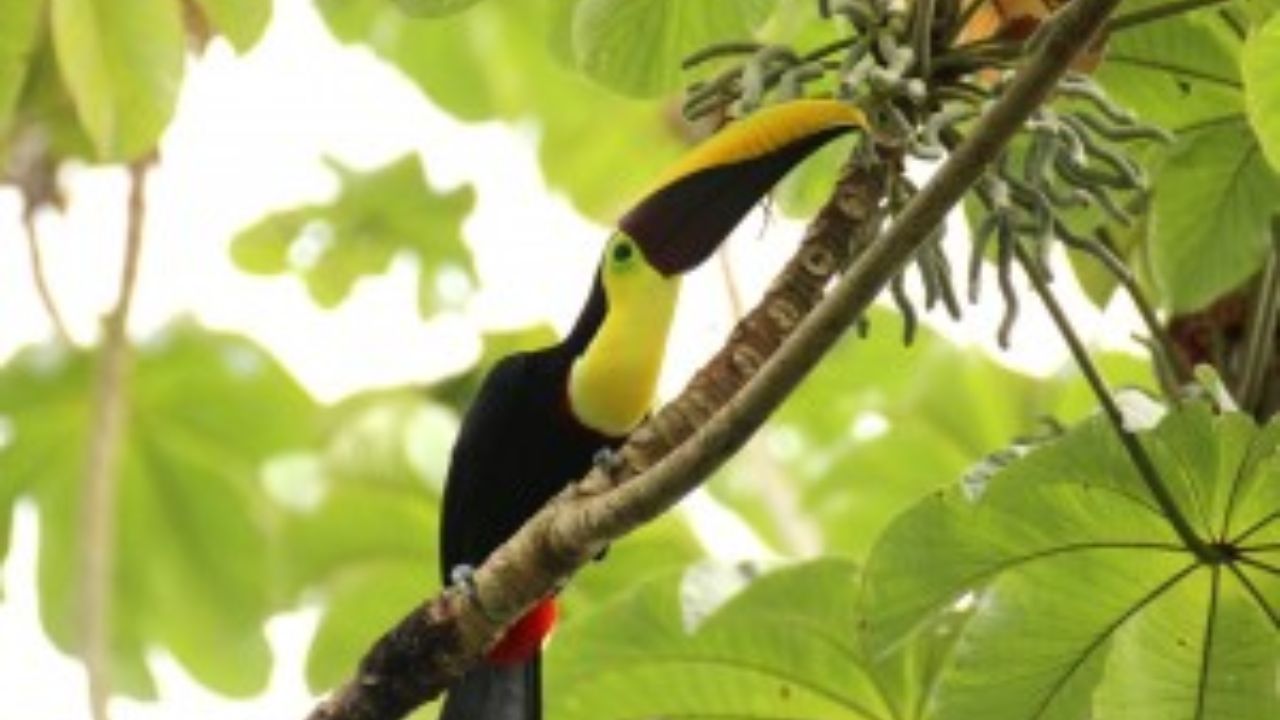
Out of the 900 species of birds found in Costa Rica, over 600 live there permanently. Non-birders can’t help but notice the more eye-catching species like the magnificent toucans and scarlet macaws, but fact is this is one of the most respected dedicated bird-watching destinations on the planet. From the lovely Yiguirro, the country’s national bird, to the stunning quetzal and impressive jabiru, Costa Rica’s birds come in all colors, shapes and make for astonishing viewing. In total, you’ll find six species of toucans inhabiting all the wonderful forests throughout Costa Rica.
Sloths
Ever-smiley sloths are arguably everyone’s favorite Costa Rica wildlife and even if going in search of them gives you a crick in the neck it will be well worthwhile once you come face to face with this goofy character. Sloths do a mighty fine job of camouflaging in the canopy of low and mid-elevation forests and spotting them can actually be quite pesky. So channel your inner sloth, move slowly and carefully and you’ll no doubt soon see one just ‘hanging about’.
Sea Turtles
Renowned as one of the world’s premier turtle nesting destinations, Costa Rica is home to 5 out of the 7 existing sea turtle species, with each species preferring certain stretches of beaches. So take it slow when visiting Costa Rica, and follow our turtle-watching guide to get the most out of your trip.
Whales
Given Costa Rica’s prime location, its pristine seas are brimming with migrating whales in July and March, the gargantuan sea kings and queens make their yearly pilgrimage.
If catching a glimpse of these magnificent beasts is a priority, check out our guide to whale watching in Costa Rica for more detailed info.
Tree frogs
Over three-quarters of all of Costa Rica’s amphibians are frogs, the most notable of which is the red eyed tree frog. As a great many of frogs are nocturnal, the best chance of spotting several species of frogs is to go on a nighttime hike, but we do recommend you take a local experienced guide with you. Not only will it be safer for you but you’ll also see many, many more creatures than you would on your own.
Coatis
The Costa Rica racoon gets a lot of flak from North American tourists, with many first-time visitors assuming they are as bothersome as those back home. But this gorgeous coatimundi is much more placid but just as curious, so although you should definitely never approach one or try to pet one, there’s no reason to run away screaming! But yes…do make sure you don’t wave your sandwich around should you spot one. They are very sweet…but they still wouldn’t turn down a free lunch!
Crocodiles
Now here’s a species of wildlife you should definitely admire from a little distance! In Costa Rica, you’ll find two crocodilians: the large American crocodile and the much smaller and less threatening spectacled caiman.
Dolphins
Between November and May, large pods of dolphins can be easily spotted swimming off the Pacific Coast of Costa Rica. Although dolphins live along this coast all year long, winter is when they breed so your chances of spotting many of them on a boat outing, are infinitely enhanced.
Big cats
Costa Rica is home to several big cats, many of them remaining elusive and very difficult to spot. Of the 7 species, the most coveted would have to be the jaguar and the puma, with the former being the largest wild cat in the country, growing up to an impressive 2 meters in length. Of all the top wildlife in Costa Rica, the jaguar remains the hardest to spot in the wild.
Renowned as one of the world’s most bio-diverse hubs, Costa Rica is home to a near infinite array of exotic wildlife. Over half a million different animal species call this country home, which equates to almost 5% of our planet’s fauna. Although there are some creatures you may not want to run into during your Costa Rica adventure trip (the common eyelash viper, for example, isn’t cuddliest of all!) there are plenty more which are incredibly adorable.
Here’s our selection of the cutest creatures you could ever hope to find in Costa Rica. But beware! Cute does not always mean approachable…
Include a few days of wildlife spotting, at the beginning or end of your Costa Rica Rios adventure trip, and you’re bound to have a truly unforgettable experience.
Jaguar
One of the most magnificent felines in existence, the jaguar is as stunning as he is elusive. Having become almost completely extinct in North America (and critically endangered in the south) jaguars are some of the most revered and protected animals in Costa Rica. Central America’s largest cat is solitary, shy and a master of camouflage, so spotting one in the wild is about as likely as winning the lotto. Still, some people manage both, so who’s to say you won’t be the next lucky punter? Head to Parque Nacional Corcovado or La Amistad, where chances may still be slim, yet are still worth a shot.
Sloth One of the most beloved and comical creatures in Costa Rica, not to mention the most adorable, the sloth is laziness personified. Here is a creature so reluctant to move that he sleeps, eats and even gives birth while hanging on a tree branch. Known for doing nothing much besides feasting on leaves and sleeping, the sloth may appear to be an easy target, yet this ingenuous creature has managed to survive and thrive phenomenally well in South America. The sloth is mostly only vulnerable to predators whenever it descends to ground to relieve itself yet thanks to its painfully slow metabolism, this is something he need do only once a week. Costa Rica is home to two species: the brown-throated three-toed sloth, and two-toed Hoffamnn’s, both of which boast the typical dreamy eyes and saintly smiles for which the animal is so renowned. In the Costa Rican wild, sloths are mostly found in the lower forests of the Osa Peninsula, Tortuguero and Puerto Viejo. Sloths are also found within Manuel Antonio National which is a small National Park in the Central Pacific Conservation Area located on the Pacific coast of Costa Rica. If however you dream of a close and personal encounter, however, include a visit Sloth Rescue Centre in Cahuita, the only one of its kind in the world.
Baird’s Tapir
The Baird’s Tapir is one of those peculiar creatures that looks like it’s a hybrid of several animals’ spare parts. With the stocky body of a rhino, and the too-short- trunk of an elephant , this unusual tapir is the largest land mammal in Central America and, although not a classical beauty, it certainly boasts a rather enticing look. The tapir is so muscle-rich, that it can usually take on a challenge from a mighty crocodile and come out on top. Although its sturdy build has ensured its survival among fellow four-footed creatures, Baird’s Tapirs are still constantly battling for survival against humans. The Parque Nacional Corcovado is where you need to go, to ensure the best bet of spotting one in the wild.
White-nosed Coati There aren’t many people who could remain stone faced at the sight of a teddy-bear like coati. This adorable creature is distantly related to the common racoon, yet boasts a much longer, upturned nose. At a quick glance it can easily be mistaken for an overweight squirrel, especially as it has a long and fluffy tail, which it keeps erect through thick foliage to guide his troops through forests. To see one of these cuties in action, keep your eyes peeled to the ground as you hike through the Arenal, Corcovado Volcano National Park, or Irazu Volcano.
Ocelot The natural reserves of Arenal and Monteverde are ideal places to see ocelots, the third-largest cat in Costa Rica. Ocelots boast a rather wide territory and can be found from Texas all the way to southern Argentina. As mysteriously elusive as the jaguar, the ocelot is often referred to as a dwarf-leopard, although it does display quite a distinctively different look. Its stupendously spotted coat is something for which the ocelot has been fervently hunted in the past, and in Costa Rica it is still considered a severely threatened species.
Sea Turtles Head to Tamarindo if travelling in the months between December and February to see Leatherback Turtles, or to Ostional (further south) if travelling at any other time. Here is where you’ll likely spot Green turtles, which tend to come much more frequently to shore. From March to October you can also head to the Caribbean side of the country and the Tortuguero National Park to see Giant Leatherbacks, Hawksbill and Green Turtles nesting.
Turtles are known for taking it slow and basking in the sun in Costa Rica. They love swimming in the coastal waters and are sometimes found on the beach, especially during nesting season. If you’re looking for turtles in Costa Rica, you’ll find three different types at Tortuguero National Park in Costa Rica. Tortuguero is home to the Green Sea Turtle, Giant Leatherback and Hawksbill Turtles. It’s fascinating to watch the hatchlings crawl from their nests down to the water. It typically happens at night, when the sand is cooler.
Green Sea Turtles
The Green Sea Turtle is one of the oldest species on Earth, existing before even the dinosaurs. They have green skin and brown, black, yellow, gray, green or olive shells. They are an endangered species, also referred to as the Eastern Pacific Green Turtle, and are sometimes simply called green turtles. They are one of the few species that leave the sea and come onto land to sun themselves when they’re not nesting. They are the largest of the sea turtles. Adults commonly weigh in above 300 pounds and can be as much as five feet long. The females nest on the beaches from July to October.
Giant Leatherback
Leatherback turtles often grow more than three feet long, weighing in at close to a ton. Their large front flippers can grow to be more than eight feet long, giving them a distinct advantage in the water. Leatherbacks are dark gray or black with white speckles and a much lighter underside. The females come ashore between February and June to dig nests and lay their eggs. When the turtles hatch, they all move down the beach, paddling through the surf and into the water. Most males will never return to land. The Giant Leatherback is the largest known living turtle species. It’s a deep diver that spends more than 99 percent of its day swimming. It doesn’t have a bony shell like most other types of turtles. There are ridges on Leatherbacks, but they have no claws in their flippers and no teeth in their mouths. They use spines in the throat and horny points on the upper lip to eat. They are an endangered one of several endangered species protected in Costa Rica
Hawksbill Turtles
The Hawksbill Turtle typical grows up to just under three feet long. They weigh in at a maximum of 200 pounds. Hawskbills are named for their hawk-like beaks for mouths. They are among the most endangered turtle species, often hunted for their colorful shells. They eat mostly sea sponges, using their sharp beaks to catch them. Hawksbill Turtles are harder to spot around the beaches of Tortuguero, because they like to nest in seclusion about every two weeks beginning in July. They usually build a maximum of four nests per season, laying 150 to 200 eggs per nest.
If you love turtles, and sea turtles in particular, be sure to tell our staff when you’re booking your vacation with Costa Rica Rios. We’ll help you find the best turtle-watching spots to see these fascinating creatures. Contact Costa Rica Rios today to make plans and reservations.